Message Writing Class 10 Format, Examples, Topics, Exercises

Message Writing Class 10 Format, Examples, Topics, Exercises

Message Writing Class 10 Format, Examples, Topics, Exercises

Message Writing is an important part of the English Language curriculum for Class 10 students. It is an essential communication skill that helps students convey their thoughts, ideas, and information to others in a clear and concise manner. In this article, we will discuss the format, examples, topics, and exercises for Message Writing for Class 10 students.

Format of Message Writing Class 10 :

The format of Message Writing should be simple and easy to understand. It should include the following details:

1. Date: The date on which the message is written should be mentioned at the top of the page.
2. Receiver’s Name: The name of the person to whom the message is addressed should be mentioned.
3. Salutation: The message should start with a salutation such as ‘Dear’, ‘Hello’, or ‘Hi’.
4. Body: The body of the message should be short, crisp, and to the point. It should include all the necessary details.
5. Closing: The message should end with a closing such as ‘Yours sincerely’ or ‘Regards’.
6. Signature: The message should be signed by the sender.

Also Read: Message Writing for Class 6 

Examples of Message Writing Class 10:

1. Message to a friend inviting him/her to your birthday party:

Date: 24th April 2023

Dear (Friend’s Name),

I hope this message finds you in the best of health and spirits. I am writing this message to invite you to my birthday party, which is on 30th April 2023 at my residence. The party will start at 7 pm, and I would be delighted if you could join us for the celebrations.

Please let me know if you can come so that I can make the necessary arrangements.

Looking forward to seeing you soon.

Yours sincerely,

(Sender’s Name)

2. Message to a teacher for leave application:

Date: 24th April 2023

Dear (Teacher’s Name),

I am writing this message to inform you that I will not be able to attend school for the next two days due to some urgent family matter. I would like to request you to grant me leave for the same.

I will ensure that I catch up with the missed lessons as soon as I return to school.

Thank you for your understanding.

Yours sincerely,

(Sender’s Name)

Examples of Message Writing Class 10

Topics for Message Writing Class 10:

There are several topics that students can choose from for their Message Writing exercises. Some of them are:

1. Inviting friends for a party.
2. Requesting leave from school.
3. Informing friends about a change of plans.
4. Sending congratulations to a friend on their achievement.
5. Apologize to a friend for a mistake.
6. Expressing gratitude to a friend for their help.

Exercises for Message Writing Class 10:

Here are a few exercises for Class 10 students to practice their Message Writing skills:

1. Write a message to your friend congratulating him/her on winning a prize in a competition.
2. Write a message to your teacher requesting permission to leave school early.
3. Write a message to your friend apologizing for not being able to attend his/her birthday party.
4. Write a message to your parents informing them about your exam results.
5. Write a message to your friend inviting him/her to a picnic.

Conclusion On Message Writing Class 10:

Message Writing is an important communication skill that students must master. By following the format, examples, and topics mentioned above, Class 10 students can improve their Message Writing skills and become more effective communicators. The exercises provided in this article can help them practice and refine their skills.

Letter Writing To Class Teacher Format, Examples, Topics, Exercises

Letter Writing To Class Teacher Format, Examples, Topics, Exercises

Letter Writing To Class Teacher Format, Examples, Topics, Exercises

Letter writing to a class teacher is an important skill that students must develop as it helps them communicate effectively with their teachers. The format of a letter to a class teacher is similar to any other formal letter, but there are a few things to keep in mind. Here is a sample format of a letter to a class teacher:

Format for Letter Writing To Class Teacher:

[Your Name]
[Class and Section]
[Date]

[Teacher’s Name]
[School Name]
[School Address]

Dear [Teacher’s Name],

Introduction: Begin your letter by introducing yourself and your purpose for writing. Here, you can mention your name, class and section, and the reason for writing the letter.

Body: The body of the letter should contain the main content of the letter. This is where you can express your thoughts, feelings, or concerns about anything related to your studies or school activities. You can also ask questions, seek help or advice, or provide feedback.

Closing: In the closing paragraph, you can thank the teacher for their time and attention. You can also express your appreciation for their guidance and support. Finally, sign off with an appropriate closing phrase such as “Sincerely” or “Thank you.”

Sincerely,
[Your Name]

Also Read: Letter Writing for Class 11 

Example Of Letter Writing To Class Teacher:

Here is an example of a letter to a class teacher:

Sarah Jones
Class 8, Section A
April 21, 2023

Ms. Karen Smith
Brighter Future School
123 Main Street
Anytown, USA 12345

Dear Ms. Smith,

I hope this letter finds you in good health and spirits. I am writing to you today to express my concerns about the upcoming math exam.

As you know, math has always been a challenging subject for me, and I have been struggling with it for some time now. I have been working hard to prepare for the exam, but I am still feeling unsure about my abilities.

I was wondering if you could give me some extra help or guidance to prepare for the exam. Perhaps you could recommend some study materials or provide some additional practice problems for me to work on.

I appreciate all the hard work and effort you put into teaching us, and I know that you want to see us succeed. Your guidance and support would mean a lot to me, and I am grateful for any help you can provide.

Thank you for your time and attention. I look forward to hearing from you soon.

Sincerely,

Sarah Jones

Example Of Letter Writing To Class Teacher

Topics For Letter Writing To Class Teacher:

Here are some topics that you can write a letter to your class teacher about:

1. Seeking help with a difficult subject
2. Expressing gratitude for their guidance and support
3. Requesting feedback on a project or assignment
4. Providing feedback on a recent lesson or activity
5. Requesting a meeting to discuss academic progress
6. Asking for a letter of recommendation for a scholarship or college application
7. Inquiring about an upcoming school event or activity
8. Discussing a personal or academic issue that is affecting your studies
9. Asking for advice on a career path or college major
10. Requesting a reschedule for an exam or quiz

Exercises For Letter Writing To Class Teacher:

1. Write a letter to your class teacher asking for advice on how to improve your writing skills.

2. Write a letter to your class teacher expressing your concerns about your performance in a particular subject.

3. Write a letter to your class teacher thanking them for their support and guidance throughout the academic year.

4. Write a letter to your class teacher requesting a meeting to discuss your academic progress.

5. Write a letter to your class teacher providing feedback on a recent lesson or activity.

6. Write a letter to your class teacher asking for advice on how to manage your time effectively.

7. Write a letter to your class teacher inquiring about an upcoming school event or activity.

8. Write a letter to your class teacher requesting a letter of recommendation for a scholarship or college application.

9. Write a letter to your class teacher discussing a personal or academic issue that is affecting your studies.

10. Write a letter to your class teacher asking for advice on a career path or college major.

Conclusion On Letter Writing To Class Teacher:

Writing a letter to a class teacher is an essential skill for students as it helps them communicate effectively with their teachers. By following the format of a formal letter, students can express their thoughts, feelings, or concerns on various topics related to their studies or school activities. The examples, topics, and exercises provided can serve as helpful guides to students who wish to improve their letter-writing skills. Overall, by learning to write a well-structured and respectful letter, students can establish better communication with their teachers and achieve their academic goals.

Writing Chemical Formulas Class 9 Worksheet Format, Examples, Topics, Exercises

Writing Chemical Formulas Class 9 Worksheet Format, Examples, Topics, Exercises

Writing Chemical Formulas Class 9 Worksheet Format, Examples, Topics, Exercises

Chemical formulas are the symbolic representation of chemical compounds. They provide information about the elements present in the compound and the ratio in which they are combined. Writing chemical formulas is a fundamental concept in chemistry that is introduced in class 9.

Writing Chemical Formulas Class 9 Worksheet Format:

A chemical formula worksheet should be designed to help students understand the basic concepts of chemical formulas. The worksheet should be divided into different sections, with each section covering a different aspect of chemical formulas.

Section 1: Introduction to Chemical Formulas

This section should introduce students to the concept of chemical formulas. It should explain what chemical formulas are and why they are important. The section should also explain the difference between an element and a compound.

Section 2: Writing Chemical Formulas

This section should focus on how to write chemical formulas. It should explain the rules for writing chemical formulas, including the use of subscripts and parentheses. The section should also provide examples of simple compounds, such as water (H2O) and carbon dioxide (CO2).

Section 3: Naming Chemical Compounds

This section should explain the rules for naming chemical compounds. It should cover the naming of binary compounds, such as sodium chloride (NaCl) and magnesium oxide (MgO), as well as compounds with polyatomic ions, such as calcium carbonate (CaCO3) and ammonium nitrate (NH4NO3).

Section 4: Balancing Chemical Equations

This section should introduce students to the concept of balancing chemical equations. It should explain the importance of balancing equations and provide examples of simple equations that can be balanced.

Section 5: Practice Exercises

This section should provide practice exercises for students to reinforce their understanding of chemical formulas. The exercises should cover all the topics discussed in the worksheet and should range from simple to complex.

Writing Chemical Formulas Class 9 Worksheet Examples:

Example 1: Write the chemical formula for sodium chloride.

Solution: Sodium chloride is a binary compound made up of sodium (Na) and chlorine (Cl). The chemical formula is NaCl.

Example 2: Write the chemical formula for magnesium oxide.

Solution: Magnesium oxide is a binary compound made up of magnesium (Mg) and oxygen (O). The chemical formula is MgO.

Example 3: Write the chemical formula for calcium carbonate.

Solution: Calcium carbonate is a compound made up of calcium (Ca), carbon (C), and oxygen (O). The chemical formula is CaCO3.

Writing Chemical Formulas Class 9 Worksheet Examples

Writing Chemical Formulas Class 9 Worksheet Topics:

1. Introduction to chemical formulas
2. Writing chemical formulas for binary compounds
3. Writing chemical formulas for compounds with polyatomic ions
4. Naming binary compounds
5. Naming compounds with polyatomic ions
6. Balancing chemical equations
7. Writing chemical formulas from names
8. Writing names from chemical formulas
9. Molecular and empirical formulas

Writing Chemical Formulas Class 9 Worksheet Exercises:

Exercise 1: Write the chemical formula for potassium bromide.
Solution: Potassium bromide is a binary compound made up of potassium (K) and bromine (Br). The chemical formula is KBr.

Exercise 2: Write the chemical formula for carbon monoxide.
Solution: Carbon monoxide is a binary compound made up of carbon (C) and oxygen (O). The chemical formula is CO.

Exercise 3: Write the chemical formula for ammonium sulfate.
Solution: Ammonium sulfate is a compound made up of ammonium (NH4) and sulfate (SO4). The chemical formula is (NH4)2SO4.

Exercise 4: Name the compound Na2SO4.
Solution: Na2SO4 is sodium sulfate.

Exercise 5: Balance the following chemical equation: Fe + O2 -> Fe2O3.
Solution: The balanced equation is: 4Fe + 3O2 -> 2Fe2O3.

Exercise 6: Write the chemical formula for sulfuric acid.
Solution: Sulfuric acid is a compound made up of hydrogen (H), sulfur (S), and oxygen (O). The chemical formula is H2SO4.

Exercise 7: Write the name for the compound CaCO3.
Solution: CaCO3 is calcium carbonate.

Exercise 8: Write the molecular formula for glucose, which has the empirical formula CH2O.
Solution: The molecular formula for glucose is C6H12O6.

Exercise 9: Write the empirical formula for a compound that contains 64.8% carbon, 13.6% hydrogen, and 21.6% oxygen by mass.
Solution: Assume a 100 g sample, then the mass of each element is: 64.8 g C, 13.6 g H, and 21.6 g O. Divide each mass by its atomic mass and round to the nearest whole number to get the empirical formula: C4H8O2.

Exercise 10: Write the chemical formula for aluminum oxide.
Solution: Aluminum oxide is a binary compound made up of aluminum (Al) and oxygen (O). The chemical formula is Al2O3.

Conclusion On Writing Chemical Formulas Class 9 Worksheet

Writing chemical formulas is a basic concept in chemistry that is introduced in class 9. A well-designed worksheet can help students understand the rules for writing chemical formulas, naming compounds, and balancing chemical equations. Providing a variety of practice exercises can help reinforce their understanding and prepare them for more advanced chemistry topics in higher grades.

CBSE previous Year Solved Papers Class 12 Biology Delhi 2014

CBSE previous Year Solved  Papers  Class 12 Biology Delhi 2014

Time allowed : 3 hours                                                                                           Maximum Marks: 70

General Instructions :

  1.  There are a total of 26 questions and five sections in the question paper, All questions are compulsory.
  2. Section A contains question number 1 to 5, Very Short Answer type questions of one mark each.
  3.  Section B contains question number 6 to 10, Short Answer type I questions of two marks each.
  4.  Section C contains question number 11 to 22, Short Answer type II questions of three marks each.
  5.  Section D contains question number 23, Value Based Question of four marks.
  6. Section E contains question number 24 to 26, Long Answer type questions of five marks each.
  7. There is no overall choice in the question paper, however, an internal choice is provided in one question of two marks, one question of three marks and all three questions of five marks. An examined is to attempt any one of the questions out of two given in the question paper with the same question number.

SET-I

SECTION-A

Question.1. Write the name of the organism that is referred to as the ‘Terror of Bengal’.
Answer : Water hyacinth (Eichhomia Cmssipes)

Question.2. What are ‘true breeding lines’ that are used to study inheritance pattern of traits in plants ?
Answer : Breeding line having undergone with a number of repeated self pollination and shows stable trait inheritance and expression for several generations called a true breeding line.

Question.3. Name any two types of cells which acts as a cellular barriers to provide innate immunity in humans.
Answer : (i) Monocytes (natural killer)
(ii) PMNL-Neutrophils (polymorpho- nuclear leukocytes)

Question.4. Mention the type of host cells suitable for the gene guns to introduce an alien DNA.
Answer : The type of host cells suitable for the gene guns to introduce an alien DNA is plant cells.

Question.5. How is‘stratification represented in a forest ecosystem?
Answer : Stratification is the way in which different species occupying different levels or arranged in a habitat. It is a way of minimizing competition for limited but vital resources, for survival.
Vertical stratification in a forest ecosystem is represented by following strata of plantss starting from the lowest layrer :
(i) The herb layer               (ii) The shrub layer
(iii) The small tree layer   (iv) The canopy layer

Question.6. Give an example of an organism that enters ‘diapause’ and why ?
Answer : Bombyx mori (silk moth) is an insect that enters diapauses to avoid adverse environmental conditions such as drought, extreme temperature, reduced food availability, which, in turn, delays the overall development. The physiological and metabolic activities are also diminished at this particular time.

Question.7. Identify ‘a’ and ‘b’ in the figure given below representing proportionate number of major vertebrate taxa.
cbse-previous-year-solved-papers-class-12-biology-delhi-2014-1
Answer: ‘a’ represents mammals and ‘b’ represents amphibians.

Question.8. State the cause of Accelerated Eutrophication.
Answer: Accelerated Eutrophication is the aging of a water body due to nutrient enrichment of its water. Release of nutrient-rich sewage and industrial effluents containing nutrients such as nitrogen and phosphorus causes accelerated eutrophication.

SECTION-B

Question.9. Why do algae and fungi shift to sexual mode of reproduction just before’the onset of adverse conditions ?
Answer : The fungi and algae switch to the sexual mode of reproduction during adverse conditions because sexual reproduction brings variation into the individuals. In algae and fungi, the zygote develops a thick wall that is resistant to dessication and damage. This ensures the continuity of species.

Question.10. A cross was carried out between two pea plants showing the contrasting traits of height of the plants. The result of the cross showed 50% parental characters, (i) Work out the cross with the help of a Punnett square.
(ii) Name the type of the cross
Answer: carried out.
cbse-previous-year-solved-papers-class-12-biology-delhi-2014-2

Question.11. How does the gene ‘I’ control ABO blood groups in humans ? Write the effect the gene has on the structure of red blood cells.
Answer: In humans, the ABO blood groups are controlled by a gene called gene ‘I’. Sugar polymers protrude from the surface of red blood cells and I controls the kind of sugar. It has three alleles, IA, IB and i. A person possesses any two of the three.
Table: The Genetic Basis of Blood Groups in Human Population alleles. IA and P dominate over i . But with each other, Tand P are co-dominant.
cbse-previous-year-solved-papers-class-12-biology-delhi-2014-3
The red blood cells have sugar polymers protrude from the plasma membrane surface and it is regulated by the gene ‘I’ of ABO blood group. The alleles IA and P produce A and B types of sugar, while allele i does not produce any sugar.
OR
Write the types of sex-determination mechanisms the following crosses show. Give an example of each type.
(i) Female XX with Male XO .
(ii) Female ZW with Male ZZ
Answer : The types of sex – determination mechanisms in the following crosses are :
(1) Female XX with Male XO : In this case females has a pair of X chromosomes and males have only one X chromosomes (the O indicates absence of chromosome), so it is the case of male 0 hetrogamety eg: grasshopper (2) Female ZW with Male ZZ : This cross shows ZW type of sex determination. In this case female has one Z and one W chromosome and these chromosomes produces different kinds of gametes, so it is the case of female hetrogamety. eg: birds

Question.12. (i) Name the scientist who suggested that the genetic code should be made of a combination of three nucleotides.
(ii) Explain the basis on which he arrived at this conclusion.
Answer : (i) George Gamow suggested that the genetic code should be made up of a combination of three nucleotides.
(ii) He arrived at this conclusion by giving the explanation if a single nucleotide code for one amino acid, then only four amino acid could be provided. Alternatively, if two nucleotides specified one amino acid, then these could be a maximum number of 16 possible arrangements of three nucleotides code for one amino acid, then there could be 64 possible combinations. Later he suggested that every amino acid is coded by atleast one nucleotide triplet or codon.

Question.13. State the disadvantage of inbreeding among cattle. How it can be overcome ?
Answer : Continuous inbreeding among catde causes inbreeding depression, decreases the fertility and, even, the productivity of an animal. It can be overcome by applying outbreeding, in which mating is done between different breeds or individuals of the same breed with unrelated superior animals.

Question.14. Explain with the help of a suitable example the naming of a restriction endonuclease.
Answer : The nomenclature of a restriction endonuclease follows a rule as like :

  1.  Ist letter of the name represents the genus of the organism from which the enzyme is derived.
  2.  IInd and IIIrd letters represent the species of the organism,
    from wher it is isolated.
  3. IVth letter represents the name of the strain.
  4.  Last is the Roman number which represents order of isolation.
    For example, In EcoRI – Derived from E.coli, strain R. It : is the first to be isolated from the bacteria.

Question.15. State how has Agrobacterium tumifaciens been made a useful cloning vector to transfer DNA to plant cells.
Answer : Agrobacterium is a bacterium that transfers a piece of DNA to plant tissues by transferring its plasmid T-DNA to the plant genome. The plasmid T-DNA of Agrobacterium is cut with restriction endonuclease and the desired gene that has to be to transferred to a particular plant is inserted with the help of ligase enzyme. Then, this Agrobacterium plasmid is allowed to infect that
” particular plant, so that it can transfer the desired gene in to the plant genome through its T-DNA. ”

Question.16. Construct an age pyramid which reflects a stable growth status of human population.
Answer : The age pyramid that reflects a stable growth status of human population can be represented as follows :
cbse-previous-year-solved-papers-class-12-biology-delhi-2014-4

Question.17. Apart from being a part of the food chain, predators play other important roles. Mention any two such roles supported by examples.
Answer : Predators play an important role in :

  1.  Maintaining the prey population under control, this regulates intra-species competition.
    For example, if tigers are removed from a forest, spotted deer will multiply rapidly. This would result in rapid destruction of herbs and grasses in the forest and ultimately the whole forest.
  2.  Predators also help in maintaining species diversity in a community, by reducing the intensity of competition among prey species.
    For Example : the starfish pisaster is an important predator on the rocky intertidal communities of the American Pacific Coast. In a field experiment, when all the starfish were removed from the area, more than 10 species of invertebrates became extinct within a year, because of inter-specific competition.

Question.18. How are ‘sticky ends’ formed on a DNA strand ? Why are they so called ?
Answer : Sticky ends in DNA strands are produced with the help of restriction enzymes. These enzymes cut the strand of DNA a little away from the centre of the palindrome sites but between the two same bases on the opposite strands. This leaves a single stranded portions at the ends. There are overhanging stretches called ‘sticky ends’ on each. strand,
cbse-previous-year-solved-papers-class-12-biology-delhi-2014-5
These are called sticky ends because they form hydrogen bonds with their complementary cut counterparts. This stickiness of the ends facilitates the action of the enzyme DNA ligase.

SECTION-C

Question.19. Explain any three advantages at seeds offer to angiosperms.
Answer: Seeds offer the following advantages to angiosperms :

  1. They provide nourishment and parental care to the developing embryo.
  2.  They protect the embryo from harsh environmental conditions.
  3. The dispersal of seeds to far-off places prevents competition among the members of the same species, thus preventing their extinction.

Question.20. Name and explain the role of the inner and middle walls of the human uterus.
Answer : The inner glandular wall of the uterus is known as endometrium.
Role : During the menstrual cycle, the endometrium wall grows into a thick, blood vessel-rich, glandular layer. It is the where embryo gets implanted. If fertilisation does not occur, the endometrium is shed during the hemorrhagic phase of the menstrual cycle.
The middle wall of the uterus is known as myometrium.
Role: It consists of smooth muscles. It brings strong contraction during delivery of the baby.

Question.21. A color-blind child is bom to a normal couple. Work out a cross to show how it is possible. Mention the sex of this child.
Answer : Color blindness is a sex-linked disease. The gene for this disorder is present on the X chromosome. The color blind child is son with genotype XCY. and sex of the child is male and carrier female.
cbse-previous-year-solved-papers-class-12-biology-delhi-2014-6
OR
Mendel published his work on inheritance of characters in 1865, but it remained unrecognised till 1900. Give three reasons for the delay in accepting his work.
Answer: The three reasons that delay in accepting Mendels work:

  1.  Lack of communication and publicity. He published it in a journal that had limited circulation.
  2.  His concept of factors (genes) as a discrete units that did not blend with each other was not accepted in the light of variations occurring continuously in nature.
  3. Mathematical approach : Mendel’s approach to explain biological phenomenon with the help of mathematics was also not accepted.

Question.22. Women are often blamed for producing female children. Consequently, they are ill-treated and ostracized. How will you address this issue scientifically if you were to conduct an awareness programme to highlight the values involved ?
Answer: Women are not responsible for determination of the gender of a child. It is absolutely wrong to ill-treat a woman for giving birth to a girl child.
In human there are 22 pairs of autosomal chromosomes and one pair of sex chromosome. In human sperm (haploid) has 22 autosomes and one of the two types of sex chromosomes, i.e. either X or Y. While human females ova (haploid) have 22 autosomes and contaih only X chromosomes. The gender of a child is determined by the type of the sex chromosome (X or Y) carried by sperm that fuses with the ovum at the time of fertilization. If the fertilising sperm has an X chromosome, then the baby would be a female and if a sperm with Y chromosomefuses with the ovum, it will develop into a male child. Thus scientifically it is correct that to say that males are responsible for determination of the gender of a child. Both males and females are equally important in every respect for the balance of nature and continuity of our species and it should because of equal joy to parents. .

Question.23. (a) Name the tropical sugar cane variety grown in South India. How has it helped in improving the sugar cane quality grown in North India ?
(b) Identify ‘a’, ‘b’ and c’ in the following table :
cbse-previous-year-solved-papers-class-12-biology-delhi-2014-7
Answer : (a) Saccharum ojficinarum variety grown in South India, which has a thicker stem and high sugar content but, it didnot grow well in Northern India. Saccharum barberi is a natively grown in Northern India. These two varieties vtere crossed to get the desirable qualities of both (high yield, higher sugar content, thicker stem and the ability to grow in Northern India).
(b) (i) Aphids (ii) Jassids and fruit borer (iii) Okra (Bhindi)

Question.24. Why are beehives kept in a crop field during flowering period ? Name any two crop fields where this is practised.
Answer: Beehives are kept in a crop field during flowering period to increase the pollination efficiency of the crop, which increases the crop yield. Also, bees collect huge amounts of nectar from the flowers of the crop in a close reach without much foraging without difficulty. This increases honey yield. Crop fields where this is practiced: Apple, sunflower and watermelon fields

Question.25. How did the process ofRNA interference help to control the nematode from infecting roots of tobacco plants ? Explain.
Answer: RNA Interference (RNAi) is a gene-silencing process that blocks the expression of genes in the parasite when it enters the host s body.

  1. Meloidegyne incognitia infects roots of tobacco plants and cause a severe loss by causing reduction in yield.
  2.  RNAi is a method to prevent infestation of roots of tobacco plants by a nematode Meloidegyne incognitia.
  3.  It is a defense in all eukaryotic organisms.
  4.  In RNAi, a complementary RNA binds to mRNA to form a double strand RNA(dsRNA) that cannot translate and blocked the expression mRNA.
  5. In this process, initially nematode-specific genes (DNA) are introduced in the host plant.
  6.  This introduced DNA forms both sense and antisense RNA.
  7.  These two strands, being complementary to each # other so that they form dsRNA.
  8. This dsRNA results in RNA interference and finally silenced the specific mRNA of nematode.
  9.  Thus and the parasite cannot survive in the transgenic host expressing specific RNAi. The transgenic plant therefore got itself protected from the parasite.

Question.26. Study the graph given below and answer the questions that follow:
cbse-previous-year-solved-papers-class-12-biology-delhi-2014-8
(i) Write the status of food and space in the curves (a) and (b).
(ii) In the absence of predators, which one of the two curves would appropriately depict the prey population?
(iii) Time has been shown on X-axis and there is a parallel dotted line above it. Give the significance of this dotted line.
Answer : (i) This curve show sample food and space for the population depicted by curve :
a : When the food and space are unlimited available
b :When the resources are limiting, the curve becomes sigmoid.
(ii) In the absence of predators, curve b would appropriately depict the prey population.
(iii) The dotted line represents the carrying capacity. The carrying capacity represents the size of population that the environment can hold by providing necessary resources.

Question.27. (i) What is primary productivity ? .Why does it vary in different types of ecosystems ?
(ii) State the relation between gross and net primary productivity.
Answer : (i) Primary productivity is the amount of biomass produced per unit area in a certain time period by plants during photosynthesis. It is expressed in terms of g/m2 or Kcal/m2.
Primary productivity depends upon the type of plant species associated with an ecosystem, photosynthetic capacity of these plants and nutrient availability. This is the reason why it varies in different types of ecosystems.
(ii) The relation between the gross and net primary productivity can be shown as :
cbse-previous-year-solved-papers-class-12-biology-delhi-2014-11
It is the rate of production of organic matter during photosynthesis, where,
Pn = Net primary productivity (NPP)
Pg = Gross primary productivity (GPP)
R = Respiration losses.

SECTION-D

Question.28. (a) Coconut palm is monoecious, while date palm is dioecious. Why are they so called ?
(b) Draw a labelled diagram of sectional view of a mature embryo sac of an angiosperm.
Answer : (a) Cocunut palm is monoecious, while date palm is dioecious because in coconut palm both as male and female flowers are borne on the same plant, while date palm bears exclusively either male flowers or female flowers.
(b) Diagram showing sectional view of a mature embryo sac of an angiosperm
cbse-previous-year-solved-papers-class-12-biology-delhi-2014-9
OR
(a) How is ‘oogenesis’ markedly different from ‘spermatogenesis’ with respect to the growth till puberty in the humans?
(b) Draw a sectional view of human ovary and label the different follicular stages, ovum and Corpus luteum.
cbse-previous-year-solved-papers-class-12-biology-delhi-2014-10
cbse-previous-year-solved-papers-class-12-biology-delhi-2014-12

Question.29. (a) Explain the process of DNA replication with the help of a schematic diagram.
(b) In which phase of the cell cycle does replication occur in
Eukaryotes ? Whast would happen if cell-division is not
followed after DNA replication.
Answer : (a) Mechanism of DNA Replication. The following
steps are involved in replication of DNA’:

  1.  Origin of Replication : Replication begins at a particular region of DNA which has a particular nucleotide sequence called autonomic replicating dioxyribonucleo tides:
  2. Oxynation of dioxyribonuleotides:
    cbse-previous-year-solved-papers-class-12-biology-delhi-2014-13
  3.  Initation of Replication: Origin of replication is recognised by complex. The unwinding of DNA molecules starts at specific points called Initiation point. These are identified by specific initiator proteins.
  4.  Unwinding of Helix :
    (a) The enzyme Helicase unwinds the DNA helix & unzips the double strands of DNA. This process is ATP dependent. It takes place by breaking of H-bonds.
    (b) Unwinding of DNA molecule into two strands results in the formation of DNA replication bubble which later extend as a Y-shaped structure called Replication fork.
    (c) The separated strands become stablised in this condition with the help of single strand binding proteins (SSBPs).
    (d) Due to unwinding, a supercoiling & tenstion is created, which is released by enzymes Topoisomerases I & II. Topoisomerase II of prokaryotes is also called Gyrase, which functions both as Helicase & Topoisomerases .
  5. Formation of Primer Strand:
    (a)Once the primer strand formed,DNA replication occurs in 5”->3′ direction i.e during synthesis of new strand dioxyribonuleotides (dATP,dGTP,dTTP,dCTP) are added in the free 3′ OHead.
    cbse-previous-year-solved-papers-class-12-biology-delhi-2014-14
    cbse-previous-year-solved-papers-class-12-biology-delhi-2014-15
    The -release of 2 phosphate molecule & energy aid in formation of H-bonds.
    cbse-previous-year-solved-papers-class-12-biology-delhi-2014-16
    (b) DNA replication occurs in S phase of cell cycle in eukaryotes. If cell division is not followed aftre DNA. replication then cell enters in G0 phase and becomes permanent and specialized.
    (c) As the DNA replication proceeds on the two parental strands, synthesis of daughter parent 3’—> 5’ strand. It is called Leading Daughter strand.
    (d) Synthesis of the other daughter strand along the other parental strand, takes place in the form of short pieces because of the opposite arrangement of nucleotides. A new RNA primer is formed everytime, where new DNA strand is built in small segments. These RNA primers are removed by polymerase I & a enzymes in prokaryotes .
    (e) Since replication is continuous over one strand & discontinuous over the other, it is called semi-continuous replication.
    (f) Discontinuous pieces of the lagging strand are joined Overall Direction of Replication.

(b) DNA replication occurs in S phase of cell cycle in eukaryotes.If cell division is not followed after DNA replication then cell enters in G0 phase and becomes permanent and specialized.
OR
(a)Explain Darwinian theory of evolution with the help of one suitable example. State the two key concept of the theory.
(b) Mention any three characteristics of Neanderthal man that lived in near east and central Asia.
Answer: (a) Darwinian Theory of Evolution took place by natural selection. The number of life forms depends upon their life span and their ability to multiply. Another aspect of Darwinian Theory is natural selection, the survival of the fittest where nature selects the individuals, which are most fit to adapt to their environment. Example: Selection of the antibiotic resistant in bacteria. When a bacterial population grow on an agar plate containing antibiotic penicillin, the colonies that are sensitive to penicillin die, whereas one or few bacterial colonies that are resistant to penicillin survive. This is because these bacteria have undergone mutation results in evolution of a gene that made them resistant to penicillin drug. Hence, the advantage of an individual over the other helps in the struggle for existence.The two key concepts of the theory are :

  1. Branching descent : According to this concept, various species have come into existence from a common ancestor.
  2. Natural selection : According to this concept, nature selects the individuals, which are most fit to adapt to their environment.

(b) Characteristics of Neanderthal man :

  1.  They possess a brain size of 1400 cc.
  2.  They were short but very strong with upwards curved thigh bones. .
  3.  They used the hides to protect their body and to bury the dead.

Question.30. (a) Name the technology that has helped scientists to propagate on a large scale the desired crops in a short duration. List the steps carried out to propagate the crops by the said technique.
(b) How are somatic hybrids obtained?
Answer : (a) Plant tissue culture is the technique of in vitro maintenance and growth of plant cells, tissues & organs on a suitable culture medium. The technique of tissue culture was first suggested by Gottleib Haberlandt in 1902.
cbse-previous-year-solved-papers-class-12-biology-delhi-2014-17
The following steps are carried out to propagate crops by tissue culture :

  1.  Preparation of suitable medium : Suitable medium, containing a carbon source, such as sucrose, and inorganic
    salts, vitamins, amino acids and growth regulators like auxin, cytokinin etc.
  2. Selection of Explant : Any part of the plant, especially apical and axillary meristem can be used as explant.
  3.  Incubation : Growing the explant in the test tube, under sterile conditions.
  4.  Regeneration : Since explant show the property of totipotency, new plantlet can be regererated.
  5. Hardening : Regenerated plants are grown in pots, to expose them to environmental conditions.
  6.  Plantlet transfer: After hardening, plantlets are transferred to field.

(b) Isolated protoplasts from two different varieties of plants, each having a desirable character, can be further gronw to form a new plant. These hybrids are called somatic hybrid while the process is called somatic hybridisation.
OR
(a) Cancer is one of the most dreaded diseases of humans.
Explain ‘Contact inhibition and ‘Metastasis’ with respect to the disease. .
(b) Name the group of genes which have been identified in normal cells that could lead to cancer and How they do so?
(c) Name any two techniques which are useful to detect cancers of internal organs.
(d) Why are cancer patients often given a-interferon as part of the treatment ?
Answer : (a) Cancer is one of the most dreaded disease of humans. Normal cells show a property called contact1 inhibition, by virtue of which contact with other cells and inhibits their uncontrolled growth but cancer cells lose this property. As a result, cancer cells divide continously to give rise to a mass of cells (tumours).
Metastasis is a property of malignant tumours. Some cancer cells from tumors gets sloughed from the tumor and the reach distant sites through the blood and wherever they reach initiate the formation of new tumours by dividing actively. This property is called metastasis.
(b) Cellular oncogenes (c-onc) and proto-oncogenes are the group of genes that have been identified in normal cells. These genes when activated under certain conditions, would lead to oncogenic transformation of the cells.
(c) Techniques such as radiography, CT (Computed Tomography) and MRI (Magnetic Resonance Imaging) are useful to detect cancers of internal organs.
(d) The biological response modifiers such as a-interferoris are given to cancer patients as part of their treatment because it activates a patient s immune system and helps in destroying the tumour.

SET -II

SECTION-A

Question.4. Name the two intermediate hosts which the human liver fluke depends on to complete its life cycle so as to facilitate parasitization of its primary host.
Answer: Terrestrial snail and Fish, are two intermediate hosts on which the human liver fluke depends on to complete its life cycle so as to facilitate parasitization of its primary host.

Question.7. Mention how does DNA polymorphism arise in a population.
Answer : DNA polymorphism is a genetic variant and intro-duced in a population by mutation and genetic drift.

SECTION-B

Question.9. Name the organic materials the exine and intine of an angiosperm pollen grains are made up of. Explain the role of exine.
Answer: Exine is made of sporopollenin. Intine is made of cellulose and pectin. Sporopollenin (exine) is most resistant organic material which can with stand high temperature and acids and alkalies.

Question.13. How can healthy potato plants be obtained from a desired potato variety which is viral infected ? Explain.
Answer: Tissue culture can get us disease free potato plants from viral infected plants. The apical and axillary meristems of virus infected plant are free of virus. So meristems can be removed and their culture can give us virus free plants.

Question.15. What is Biopiracy ? State the initiative taken by the Indian Parliament towards it.
Answer : Biopiracy is defined as the use of bio-resources by mitltinational companies or other organisations without
proper authorisation from concerned country or people. Indian Parliament has declared second amendment of Indian Patents bill Act (1970) this bill considers patenting, its terns emergency provisions and research and development initiatives.

Question.18. Write the role of‘Ori’ and ‘restriction site in a cloning vector pBR322.
Answer: Role of Ori sequence and ristriction site in pBR322: Ori is a genetic sequence that acts as the initiation site for replication of DNA, when any fragment linked .to this sequence ‘ can be initiated to replicate within host cells.
Recognition site is the specific DNA sequences which contains different palindromic sequence, as recognized by respective restriction enzymes (such as EcoRI, Hind III, Pvul, BamHI etc.). Recognition sites are sequences where the restriction enzymes cut the DNA.

SECTION-C

Question.20. A cross between a normal couple resulted in a son who was haemophilic and a normal daughter. In course of time, when the daughter was married to a normal man, to their surprise, the grandson was also haemophilic.
(a) Represent this cross in the form of a pedigree chart. Give the genotypes of the daughter and her husband.
(b) Write the conclusion you draw of the inheritance pattern of this disease.
Answer: (a)
Genotype of daughter- XX
Genotype of husband- XY
cbse-previous-year-solved-papers-class-12-biology-delhi-2014-18
(b) Conclusion: Haemophilia is a sex-linked recessive disease which shows it is transmitted from the carrier female to the sons. From the above pedigree chart, it can be observed that the disease is being transmitted from the carrier female to her daughter (carrier) and son (affected). The carrier daughter transmits this disease to the grandson and the possibility of a female becoming a haemophilic is extremely rare. This inheritance is called crisscross inheritance.

Question.22. Draw a labelled diagram of the sectional view of a Human seminiferous tubule, (six parts to be labelled)
Answer:
cbse-previous-year-solved-papers-class-12-biology-delhi-2014-19

SECTION-D

Question.30. Explain the ovarian and uterine events that occur during a menstrual cycle in a human female, under the influence of Pituitary and Ovarian hormones respectively.
Answer : Menstrual Cycle : Menstrual cycle is the reproductive cycle in all primates and begins at puberty (menarche). It involves cyclic changes in females reproductive tract culminating in menstruation that is flow of cast off uterine and fallopian tube lining along with blood and tissue fluid through the vagina. In human females, menstruation occurs once in 28 to 29 days. The cycle of events starting from one menstruation till the next one is called the menstrual cycle.
It consist of three phases:

  1. Proliferating phases : It last for about 14 days. Lining of the uterus and fallopian tubes proliferates and its vascularization increases. A graafian follicle grows, matures and secretes oestrogen. It ruptures to release its egg (secondary oocyte) after about 14 days. The LH and FSH are at their peak in the middle before release of oocyte. This phase is also called the ovulatory phase.
  2.  Secretory phase : It lasts for-about 10 days. The empty graafian follicle forms in it corpus luteum which secretes progesterone. The lining of uterus and fallopian tubes undergoes further hypertrophy. Endometrial glands of the uterus secrete a nutritive fluid for the foetus.
  3.  Menstrual (Bleeding) phases : It lasts for about 4 days. If fertilization does not occur, the corpus luteum regresses, and the linning of uterus and fallopian tubes breakdown, resulting in menstrual flow. This occurs after 25 days and continues 3 to 5 days. The basal part of endometrial lining remain intact during menstruation and produces new uterine lining.
    cbse-previous-year-solved-papers-class-12-biology-delhi-2014-20

OR
(a) Why does endosperm development precede embryo development in angiosperm seeds ? State the role of endosperm in mature albuminous seeds.
(b) Describe with the help of three labelled diagrams the different embryonic stages that include mature embryo of dicot plants.
Answer : (a) Endosperm development precedes embryo development in angiosperm seeds because primary endosperm cell divides repeatedly and forms a triploid endosperm tissue. The cells of this tissue are filled with reserve food materials which provide nutrition to the developing embryo.
Albuminous seeds stores starch and fat to retain a part of endosperm as it is not completely used up during embryo development (e.g. wheat, maize, barley, castor, sunflower).
(b) Development of embryo :
The Zygote formed after fertilization of egg cell starts dividing and gives rise to proembryo. This proembryo further divides, forming a globular, heart-shaped and mature embryo.
cbse-previous-year-solved-papers-class-12-biology-delhi-2014-21
Following are the steps that occur during the development of embryo:

  1.  In dicots zygote elongates and divides into upper and lower cell.
  2.  The lower one lying toward micropyle further divides in one direction into a row of cell called suspensor.
  3.  The upper cell towards the antipodal end is called embryo cell.
  4.  The first cell of the suspensor often enlarges and acts as , haustorium or absorbing organ while its terminal cell called hypophysis cell divides giving rise to the apex of the radicle.
  5. The upper cell or embryo cell enlarges and divides repeatedly to form eight cells that are arranged in two tiers – epibasal (terminal) and hypobasal (near the suspensor). A typical dicot embryo consists of an embryonal axis and two cotyledons.
  6.  The portion of the embryonal axis above the level of cotyledons is called epicotyl. It contains the plumule (shoot tip). The portion below the axis is called hypocotyl. It contains the radicle (root tip). The root tip is covered by the root cap.
  7.  Subsequent divisions give rise to globular heart-shaped embryo.

SET -III

SECTION-A

Question.3. How is repetitive/satellite DNA separated from bulk genomic DNA for various genetic experiments ?
Answer : Satellite DNA is separated from bulk genomic DNA by density-gradient centrifugation technique. They are separated as different peaks. The bulk DNA forms a Major peak and the other small peaks are referred to as satellite DNA.

Question.5. Name the Green House gases that contribute to total global warming.
Answer: Carbon dioxide, nitrous oxide, ozone and methane are the Greenhouse gases that are responsible for global warming.

SECTION-B

Question.12. What is gene therapy ? Name the first clinical case where it was used ?
Answer : Gene therapy is a experimental technique in which genes can be used for treating and preventing disease. A four year old girl became the first gene therapy patient on September 14, 1990 at the NIH clinical center. She was suffering from adenosine deaminase (ADA) deficiency.

Question.15. Why does Bt toxin not kill the bacterium that produces it, but kill the insect that ingests it ?
Answer : Bt toxin protein is produced by a soil bacterium called Bacillus thuringiensis in inactive prototoxin and crystalline form. The prototoxin form does not kill the bacteria. It becomes active and toxic when it is consumed by insects such as lepidopterans (armyworm), coleopterans (beedes) and dipterans (flies/mosquitoes) due to presence of alkaline pH in the gut. The activated toxin (delta endotoxins) binds to the epithelial cells in the midgut of an insect and creates pores that cause lyses and swelling, eventually killing the insect.

Question.17. Identify the following pairs as homologous of analogous organs1:
(i) Sweet potato and potato
(ii) Eye of octopus and eye of mammals ,
(iii) Thoms of Bougainvillaea and tendrils of Cucurbits
(iv) Fore limbs of bat and whale
Answer : (i) Analogous organs, (ii) Analogous organs,
(iii) Homologous organs, (iv) Homologous organs

Question.18. List the post – fertilisation events in angiosperms.
Answer : The various post-fertilisation events occurring in angiosperms are:

  1. Sepals, petals and stamens of the flower dry up alid fall off.
  2. The Zygote develops into an embryo.
  3.  Ovules develop into the seed.
  4.  The Ovary develops into the fruit.

SECTION-C

Question.21. What are Methanogens ? Name the animals they are present in and the role they play there.
Answer: Methanogens are anaerobic bacteria grow anaerobically on cellulose material that produce large amounts of methane.
Ex : Methanobacterium.
Methanogens are commonly found in the rumen of catde and help in cellulose digestion. Hence, excreta of cattle (gobar) is rich in methanogens.

Question.27. There are many animals that have become extinct in the wild but continue to be maintained in Zoological parks.
(i) What type of biodiversity conservation is observed in this case ?
(ii) Explain any other two ways which help in this type of conservation.
Answer : (i) It is an example of ex-situ conservation.
(ii) Cryopreservation and tissue culture are two ways that helps in ex-situ conservation.
Cryopreservation : The preservation of gamates of threatened species in viable and fertile conditions at sub-zero temperatures which help in preserving these cells for longer periods.
Tissue culture : Plants are propagated from a small mass of tissue, called callus.

SECTION-D

Question.29. (a) Draw a labelled diagrammatic view of human male reproductive system.
(b) Differentiate between :
(i) Vas deferens and vasa efferentia
(ii) Spermatogenesis and spermiogenesis
Answer: (a) Diagrammatic view of a human male reproductive
OR
(a) Explain the phenomenon of double fertilization.
(b) Draw a labelled diagram of a typical anatropous ovule.
Answer : (a) Phenomenon of double fertilisation :
Pollen grains gets transferred from the anther to the stigma, and then the pollen tube enters one of the synergids and released two male gametes. One gamete moves towards the egg cell and fuses to form the zygote to complete the syngamy. The other gamete fuses with the two polar nuclei and forms triploid Primary Endosperm Nucleus (PEN). This fusion of one male gamete with two polar nuclei is termed as triple fusion. Since, , two kinds of fusion—syngamy and triple fusion—take place during fertilization in a flower, the process is known as double fertilization. It is a characteristic of flowering plants.
cbse-previous-year-solved-papers-class-12-biology-delhi-2014-22
(b) Labelled diagram of a typical anatropous ovule
cbse-previous-year-solved-papers-class-12-biology-delhi-2014-23

Descriptive Writing Topics For Class 6 Format, Examples, Exercises

Descriptive Writing Topics For Class 6 Format, Examples, Exercises

Descriptive Writing Topics For Class 6 Format, Examples, Exercises

Descriptive writing is an important aspect of language learning that allows students to express their creativity and imagination. It is a form of writing that describes a person, place, event, or object in detail using sensory details, vivid imagery, and figurative language. In this article, we will explore some descriptive writing topics for class 6, including format, examples, and exercises.

Also Read: Descriptive Writing Class 9 

Format of Descriptive Writing Topics For Class 6:

Descriptive writing follows a specific format that includes the following elements:

1. Introduction: The introduction should provide an overview of the topic and capture the reader’s attention.

2. Body Paragraphs: The body paragraphs should describe the topic in detail using sensory details, vivid imagery, and figurative language.

3. Conclusion: The conclusion should summarize the main points of the essay and leave a lasting impression on the reader.

Format of Descriptive Writing Topics For Class 6

Examples of Descriptive Writing Topics For Class 6:

Here are some examples of descriptive writing:

1. The Beach: The sun was setting, casting a warm golden glow over the calm waters of the ocean. The sound of the waves crashing against the shore was soothing, and the smell of salt water filled the air. The sand was warm and soft under my feet, and I could feel the gentle breeze blowing through my hair.

2. My Dog: My dog is a fluffy, white Pomeranian with big, brown eyes. She is always full of energy and loves to play fetch. Her fur is soft and silky, and she has a cute little button nose. Whenever I come home from school, she greets me with a wagging tail and a lick on the face.

3. My Favorite Food: My favorite food is pizza. The crust is crispy and golden, and the cheese is gooey and melted. The tomato sauce is tangy and sweet, and the toppings are always fresh and flavorful. Every bite is a burst of savory goodness.

Exercises for Descriptive Writing Topics For Class 6:

Here are some exercises to help students improve their descriptive writing skills:

1. Describe a Favorite Place: Ask students to describe their favorite place using sensory details, vivid imagery, and figurative language. Encourage them to use their five senses to create a vivid picture in the reader’s mind.

2. Describe a Person: Ask students to describe a person they admire or respect using sensory details, vivid imagery, and figurative language. Encourage them to use adjectives and similes to create a vivid portrait of the person.

3. Describe an Event: Ask students to describe an event they attended using sensory details, vivid imagery, and figurative language. Encourage them to use descriptive language to convey the atmosphere, emotions, and actions of the event.

4. Write a Short Story: Ask students to write a short story that includes descriptive writing. Encourage them to use sensory details, vivid imagery, and figurative language to create a compelling narrative.

Conclusion On Descriptive Writing Topics For Class 6

Descriptive writing is an important skill that can help students express their creativity and imagination. By using sensory details, vivid imagery, and figurative language, students can create a vivid picture in the reader’s mind. By practicing descriptive writing exercises, students can improve their writing skills and develop their own unique writing style.

Picture Writing In English For Class 10 Format, Examples, Topics, Exercises

Picture Writing In English For Class 10 Format, Examples, Topics, Exercises

Picture Writing In English For Class 10 Format, Examples, Topics, Exercises

It is often used as an exercise in English language classes to help students improve their writing skills and develop their imagination. In this article, we will provide a format for picture writing in English for Class 10, examples of topics, and exercises to help you improve your skills.

Format for Picture Writing in English for Class 10:

Picture writing in English can take different forms depending on the type of picture and the task given. However, the basic format for picture writing includes the following:

1. Introduction: Begin with a brief introduction that describes the picture and the setting. Provide some context to help the reader understand the picture.

2. Body: The body of your picture writing should contain the main story or description. Use vivid language and sensory details to create a clear picture in the reader’s mind. You can also use dialogue to add interest to your writing.

3. Conclusion: End your picture writing with a conclusion that ties everything together. You can summarize the main points of your story or provide a final thought or reflection.

Also Read: Picture Writing For Class 2 

Examples of Picture Writing in English for Class 10:

1. Write a story based on the following picture:

Picture Writing In English For Class 10 Examples

Introduction: Sarah and John had been planning their trip to the beach for months. They had heard that the sunsets were breathtaking and wanted to experience it for themselves.

Body: As they walked hand in hand along the shore, the sky began to turn a deep shade of orange. Sarah couldn’t help but feel overwhelmed by the beauty of it all. She turned to John and smiled. “This is perfect,” she said.

As they continued to walk, they came across a small beachside café. They decided to stop and get a drink. As they sat at a table overlooking the ocean, they talked about their hopes and dreams for the future.

Conclusion: As the sun began to set, Sarah and John knew that this moment would stay with them forever. They had found something special in each other and in the beauty of the world around them.

2. Write a description based on the following picture:

Examples of Picture Writing in English for Class 10:

Introduction: The mountain range in front of me was a sight to behold. The snow-covered peaks rose up towards the sky, their jagged edges cutting through the blue.

Body: I could feel the crisp, cold air on my face as I stood there, taking in the view. The snow crunched beneath my feet as I walked toward the edge of the mountain. Looking down, I could see the vast expanse of the valley below.

The clouds above moved slowly, casting shadows on the mountainside. I could hear the faint sound of birds in the distance and the occasional rustle of the wind.

Conclusion: As I stood there, I felt a sense of peace wash over me. The world seemed so vast and yet so interconnected. I knew that I would never forget this moment and the beauty of the world around me.

Topics for Picture Writing in English for Class 10:

Here are some topics for picture writing in English for Class 10:

1. A beautiful garden in full bloom
2. A busy city street
3. An abandoned house in the middle of a forest
4. A group of friends gathered around a campfire
5. A mountain climber reaching the summit
6. A family enjoying a picnic in a park
7. A stunning waterfall in a tropical rainforest
8. A street musician playing music in the city
9. A farmer working in a field at sunset
10. A group of tourists exploring an ancient ruin

Exercises for Picture Writing in English for Class 10:

1. Choose a picture and write a story based on it. Be sure to include a clear introduction, a detailed body, and a conclusion that ties everything together.
2. Write a description of a picture that captures the mood and atmosphere of the scene. Focus on using sensory details to help the reader experience the picture.
3. Use a picture as a prompt for a poem. Write a poem that captures the emotions and themes suggested by the picture.
4. Choose a picture and write a letter to a friend describing the scene. Imagine that your friend is not able to see the picture, so be sure to include vivid descriptions that paint a clear picture.
5. Choose a picture and write a short play or script based on the scene. Use dialogue and action to create a story that captures the essence of the picture.

Conclusion On Picture Writing In English For Class 10:

Picture writing in English is an excellent exercise for improving your writing skills and developing your imagination. By following the basic format for picture writing and practicing with different topics and exercises, you can become a more confident and creative writer. Remember to focus on using vivid language, sensory details, and clear structure to create a powerful and engaging story or description.

Poster Writing For Class 8 Format, Examples, Topics, Exercises

Poster Writing For Class 8 Format, Examples, Topics, Exercises

Poster Writing For Class 8 Format, Examples, Topics, Exercises

Poster writing is an essential skill that every student should possess. It is a concise and straightforward way of conveying a message to the audience. Posters are commonly used in various fields, such as advertising, education, and social awareness campaigns. In this article, we will discuss the format, examples, topics, and exercises related to poster writing for class 8.

Format Of A Poster Writing For Class 8

A poster should have the following components:

1. Headline or Title: The headline should be short and catchy. It should grab the attention of the audience and make them want to read the poster.
2. Image or Graphic: A picture is worth a thousand words. An image or graphic can help convey the message of the poster more effectively.
3. Body: The body of the poster should be brief and to the point. It should contain the necessary information to convey the message clearly.
4. Call to Action: A call to action is a statement that encourages the audience to take action. It could be to visit a website, donate to a cause, or attend an event.

Also Read: Poster Writing Class 11 

Examples of Poster Writing For Class 8

Example 1: Save Water

Headline: Save Water, Save Life

Image: A picture of a dry riverbed or a tap running dry

Body: Water is a precious resource that we all need to conserve. Simple actions like turning off the tap when not in use, fixing leaks, and using water-efficient appliances can help conserve water. Let’s do our part in saving water and ensuring a better future for ourselves and the planet.

Call to Action: Conserve water today, for a better tomorrow.

Example 2: Stop Bullying

Headline: Stop Bullying, Start Empathy

Image: A picture of a student being bullied or a group of students standing up for a bullied student

Body: Bullying is a serious problem that affects many students. It can have long-lasting effects on their mental health and well-being. We need to start showing empathy towards each other and stop bullying. Let’s create a safe and inclusive environment for everyone.

Call to Action: Stand up against bullying and promote empathy.

Examples of Poster Writing For Class 8

Topics for Poster Writing For Class 8

1. Climate Change and Environmental Issues
2. Road Safety
3. Cyberbullying and Online Safety
4. Healthy Lifestyle and Fitness
5. Importance of Education
6. Wildlife Conservation
7. Say No to Drugs and Alcohol
8. Importance of Hygiene and Sanitation
9. Gender Equality
10. Say No to Plastic

Exercises for Poster Writing For Class 8

1. Climate Change and Environmental Issues

1. Write a poster on the importance of exercise and fitness.
2. Create a poster promoting road safety and safe driving.
3. Design a poster to promote awareness about global warming and climate change.
4. Make a poster promoting the importance of education and literacy.
5. Create a poster promoting wildlife conservation and the protection of endangered species.
6. Design a poster to promote the importance of hygiene and sanitation in preventing diseases.
7. Write a poster on gender equality and the importance of treating everyone equally.
8. Make a poster promoting the harmful effects of drugs and alcohol on the human body.
9. Create a poster promoting the reduction of plastic usage and the importance of recycling.
10. Write a poster on the dangers of cyberbullying and promoting online safety.

Conclusion On Poster Writing For Class 8

Poster writing is an effective way of conveying a message to a large audience. By following the format and using catchy headlines and images, students can create posters that are visually appealing and informative. The topics and exercises mentioned in this article can help students develop their poster writing skills and become effective communicators.

CBSE Previous Year Solved Papers Class 12 Physics Delhi 2014

CBSE Previous Year Solved  Papers  Class 12 Physics Delhi 2014

Time allowed : 3 hours                                                                                           Maximum Marks: 70

General Instructions:

    1.  All questions are compulsory. There are 26
      questions in all.
    2.  This question paper has five sections : Section A, Section B, Section C, Section D and Section E.
    3. Section A contains five questions of one mark each, Section B contains five questions of two marks each, Section C contains twelve questions of three marks each, Section D contains one value based question of four marks and Section E contains three questions of five marks each.
    4.  There is no overall choice. However, an internal choice has been provided in one question of two marks, one question of three marks and all the three questions of five marks weight age. You have to attempt only one of the choices in such questions.
    5. You may use the following values of physical constants wherever necessary:

cbse-previous-year-solved-papers-class-12-physics-outside-delhi-2016-1.

SET I

Note : Except for the following questions, all the remaining questions have been asked in Previous Set.

Question.1. Define the term ‘Mobility’ of charge carriers in a conductor. Write its S.I. unit.
Answer : Mobility of charge carriers in a conductor is defined as the magnitude of their drift velocity per unit applied electric field.
cbse-previous-year-solved-papers-class-12-physics-delhi-2014-1

Question.2. The carrier wave is given by C(t) = 2 sin (ωt) volt. The modulating signal is a square wave as shown. Find modulation index.
cbse-previous-year-solved-papers-class-12-physics-delhi-2014-2
cbse-previous-year-solved-papers-class-12-physics-delhi-2014-3

Question.3. For any charge configuration, equipotential surface through a point is normal to the electric field. Justify.
Answer: If the electric field were not normal to equipotential surface, it would have non-zero component along the surface. To move a charge against this component, work would have to be done. But no work is needed to move a test charge on an equipotential surface. Hence electric field must be normal to the equipotential surface at every point.

Question.4. Two spherical bobs, one metallic and the other of glass, of the same size are allowed to fall freely from the same height above the ground. Which of the two would reach earlier and why?
Answer : Glass bob will reach the ground earlier than the metallic bob. As the metallic bob falls, it intercepts earth’s magnetic field and induced currents are set up in it which oppose its downward motion. But no such currents are induced in the glass.

Question.5. Show variation of resistivity of copper as a function of temperature in a graph.
Answer: The variation of resistivity of copper with temperature is parabolic in nature. This is shown in the following graph :
cbse-previous-year-solved-papers-class-12-physics-delhi-2014-4

Question.6. A convex lens is placed in contact with a plane mirror. A point object at a distance of 20 cm on the axis of this combination has its image coinciding with itself. What is the focal length of the lens ?
Answer : The figure shows a convex lens L placed in contact with a plane mirror M. P is the point object, kept in front of
cbse-previous-year-solved-papers-class-12-physics-delhi-2014-5
this combination at a distance of 20 cm, from it. As the image coincides with itself, the rays from the object, after refraction from lens, should fall normally on the mirror M, so that they retrace their path. For this, the rays from P, after refraction from the lens must from a parallel beam perpendicular to M. For clarity, M has been shown at a small distance from L (in diagram). As the rays from P, form a parallel beam after refraction, P must be at the focus of the lens. Hence the focal length of the lens is 20 cm.

Question.7.
cbse-previous-year-solved-papers-class-12-physics-delhi-2014-6
Answer: The Lorentz magnetic force is given by the following relation:
cbse-previous-year-solved-papers-class-12-physics-delhi-2014-7

Question.8. The figure given below-shows the block diagram of a generalized communication system. Identify the element labeled ‘X’ and write its function.
cbse-previous-year-solved-papers-class-12-physics-delhi-2014-8
Answer : The element labeled ‘X’ is called ‘channel’. The function of the channel is to connect the transmitter and the receiver. A channel may either be wireless or in the form of wires connecting the transmitter and the receiver.

Question.9. Out of the two magnetic materials, ‘A’ has relative permeability slightly greater than unity while ‘B’ has less than unity. Identify the nature of the materials ‘A’ and ‘B’. Will their susceptibilities be positive or negative ?
cbse-previous-year-solved-papers-class-12-physics-delhi-2014-9

Question.10.
cbse-previous-year-solved-papers-class-12-physics-delhi-2014-10

Question.11. For a single slit of width a, the first minimum of the interference pattern of a monochromatic light of wavelength k occurs at an angle of k/a. At the same angle of k/a, we get a maximum for two narrow slits separated by a distance a. Explain.
cbse-previous-year-solved-papers-class-12-physics-delhi-2014-11

Question.12. Write the truth table for the combination of the gates shown. Name the gates used.
cbse-previous-year-solved-papers-class-12-physics-delhi-2014-12
Identify the logic gates marked ‘P’ and ‘Q’ in the given circuit. Write the truth table for the combination.
cbse-previous-year-solved-papers-class-12-physics-delhi-2014-13

Question.13. State Kirchhoff’s rules. Explain briefly how these rules are justified.
Answer : Kirchhoff s first Law—Junction Rule In an electrical circuit, the algebraic sum of the currents meeting at a junction is always zero.
cbse-previous-year-solved-papers-class-12-physics-delhi-2014-14
Convention : The current flowing towards the junction is taken as positive.
The current flowing away from the junction is taken as negative.
cbse-previous-year-solved-papers-class-12-physics-delhi-2014-15
This law is based on the law of conservation of charge. KirchhofFs Second Law — Loop rule
In a closed loop, the algebraic sum of the emf ‘s is equal to the algebraic sum of the products of the resistances and the currents flowing through them.
cbse-previous-year-solved-papers-class-12-physics-delhi-2014-16

Question.14. A capacitor ‘C’ a variable resistor ‘R’ and a bulb ‘B’ are connected in series to the ac mains in circuit as shown. The bulb glows with some brightness. How will the glow of the bulb change if (i) a dielectric slab is introduced between the plates of the capacitor, keeping resistance R to be the same; (ii) the resistance R is increased keeping the same capacitance?
cbse-previous-year-solved-papers-class-12-physics-delhi-2014-17
Answer : (i) As the dielectric slab is introduced between the f plates of the capacitor, its capacitance will increase. Hence, the potential drop across the capacitor will decrease (V= Q/C). As a result, the potential drop across the bulb will increase (since both are connected in series’). So, its brightness will increase.
(ii) As the resistance (R) is increased, the potential drop across the resistor will increase. As a result, the potential drop across the bulb will decrease (since both are connected in series). So, its brightness will decrease.

Question.15. State the underlying principle of a cyclotron. Write briefly how this machine is used to accelerate charged particles to high energies.
Answer : The underlying principle of a cyclotron is that an oscillating electric field can be used to accelerate a charge particle to high energy.
A cyclotron involves the use of an electric field to accelerate charge particles across the gap between the two D-shaped magnetic field regions. The magnetic field is perpendicular to the paths of the charged particles that makes them follow in circular paths with in the two Ds. An alternating voltage accelerates the charged particles each time they cross the Ds. The radius of each particles path increases with its speed. So, the accelerated particles spiral toward the outer wall of the cyclotron.
cbse-previous-year-solved-papers-class-12-physics-delhi-2014-18
[The Ds are the semi-circular structures (D1 and D2) between which the charges move. The accelerating voltage is maintained across the opposite halves of the Ds.] Square wave electric fields are used to accelerate the charged particles in a cyclotron.
cbse-previous-year-solved-papers-class-12-physics-delhi-2014-19
The accelerating electric field reverses just at the time the change particle finishes its half circle so that it gets accelerated across the gap between the Ds.
The particle gets accelerated again and again, and its velocity increases. Therefore, it attains high kinetic energy.
The positively charged ion adopts a circular path with a constant speed v, under the action of magnetic field B, which is perpendicular to the planes of D’s of radius r.
r=mv/qB

Question.16. An electric dipole of length 4 cm, when placed with its axis making an angle of 60° with a uniform electric field, experiences a torque of 4√3 Nm. Calculate the potential energy of the dipole, if it has charge ± 8 nC.
cbse-previous-year-solved-papers-class-12-physics-delhi-2014-20

Question.17. A proton and a deuteron are accelerated through the same accelerating potential. Which one of the two has
(a) greater value of de-Broglie wavelength associated with it, and
(b) less momentum ?
Give reasons to justify your Answer.
cbse-previous-year-solved-papers-class-12-physics-delhi-2014-21

Question.18. (i) Monochromatic light of frequency 6.0 x 10¹⁴ Hz is produced by a laser. The power emitted is 2.0 x 10⁻³ W. Estimate the number of photons emitted per second on an average by the source.
(ii) Draw a plot showing the variation of photoelectric current versus the intensity of incident radiation on a given photosensitive
cbse-previous-year-solved-papers-class-12-physics-delhi-2014-22
cbse-previous-year-solved-papers-class-12-physics-delhi-2014-24

Question.19. A 12.5 eV electron beam is used to bombard gaseous hydrogen at room temperature. Up to which energy level the hydrogen atoms would be excited? Calculate the wavelength of the first member of Lyman and first member of Balmer series.
cbse-previous-year-solved-papers-class-12-physics-delhi-2014-25
cbse-previous-year-solved-papers-class-12-physics-delhi-2014-26

Question.20. When Sunita, a class XII student, came to know that her parents are planning to rent out the top floor of their house to a mobile company she protested. She tried hard to convince her patents that this move would be a health hazard. Ultimately her parents agreed :
(1) In what way can the setting up of transmission tower by a mobile company in a residential colony prove to be injurious to health ?
(2) By objecting to this move of her parents, what value did Sunita display?
(3) Estimate the range of e.m. waves which can be transmitted by an antenna of height 20 m. (Given radius of the earth = 6400 km)
Answer: (1) A transmitting tower makes use of electromagnetic waves such as microwaves, exposure to which can cause severe health hazards like, giddiness, headache, tumour and cancer. Also, the transmitting antenna operates on a very high power, so the risk of someone getting severely burnt in a residential area increases.
(2) By objecting to this move of her parents, Sunita has displayed awareness towards the health and environment of her society.
(3) Range of the transmitting antenna.
cbse-previous-year-solved-papers-class-12-physics-delhi-2014-27

Question.21. A potentiometer wire of length 1 m has a resistance of 10Ω . It is connected to a 6 V battery in series with a resistance of 5 Ω . Determine the emf of the primary cell which gives a balance point at 40 cm.
cbse-previous-year-solved-papers-class-12-physics-delhi-2014-28

Question.22. (a) Draw a labeled ray diagram showing the formation of a final image by a compound microscope at least distance of distinct vision. ’
(b) The total magnification produced by a compound microscope is 20. The magnification produced by the eye piece is 5. The microscope is focussed on a certain object. The distance between the objective and eye-piece is observed to be 14 cm. If least distance of distinct vision is 20 cm, calculate the focal length of the objective and the eye-piece.
Answer: (a)
cbse-previous-year-solved-papers-class-12-physics-delhi-2014-29
cbse-previous-year-solved-papers-class-12-physics-delhi-2014-30

Question.23. (a) A mobile phone lies along the principal axis of a concave mirror. Show, with the help of a suitable diagram, the formation of its image. Explain why magnification is ‘ not uniform.
(b) Suppose the lower half of the concave mirrors reflecting surface is covered with an opaque material. What effect this will have on the image of the object? Explain.
Answer: (a)
cbse-previous-year-solved-papers-class-12-physics-delhi-2014-31
The image of the mobile phone formed by the concave mirror is shown in the above figure. The part of the mobile phone that is at C will form an image of the same size only at C. In the figure, we can see that B’C = BC. The part of the mobile phone that lies between C and F will form enlarged image beyond C as shown in the figure. It can be observed that the magnification of each part of the mobile phone cannot be uniform on account of different locations. That is why the image formed is not uniform.
(b) As the laws of reflection are true for all points of the mirror, the height of the whole image will be produced. However, as the area of the reflecting surface has been reduced, the image intensity will be reduced. In other words, the image produced will be less bright.

Question.24. (a) Obtain the expression for the energy stored per unit volume in a charged parallel plate capacitor.
(b) The electric field inside a parallel plate capacitor is E. Find the amount of work done in moving a charge q over a closed rectangular loop abcda.
cbse-previous-year-solved-papers-class-12-physics-delhi-2014-32
OR
(a) Derive the expression for the capacitance of a parallel plate capacitor having plate area A and plate separation d.
(b) Two charged spherical conductors of radii R1 and R2 when connected by a conducting wire acquire charge q1 and q2 respectively. Find the ratio of their surface charge densities in terms of their radii.
Answer: (a) Let us consider a parallel-plate capacitor of plate area A. If seperation between plates is d metre, capacitance C in given by
cbse-previous-year-solved-papers-class-12-physics-delhi-2014-33
cbse-previous-year-solved-papers-class-12-physics-delhi-2014-34
cbse-previous-year-solved-papers-class-12-physics-delhi-2014-35
cbse-previous-year-solved-papers-class-12-physics-delhi-2014-36

Question.25. (a) State Ampere’s Circuital law, expressing it in the integral form.
(b) Two long coaxial insulated solenoids, S1 and S2 of equal lengths are wound one over the other as shown in the figure. A steady current “I” flow through the inner solenoid S1 to the other end B, which is connected to the outer solenoid S2 through which the same current “I” flows in the opposite direction so as to come out at end A. If n1 and n2 are the number of turns per unit length, find the magnitude and direction of the net magnetic field at a point (i) inside on the axis and (ii) outside the combined system.
cbse-previous-year-solved-papers-class-12-physics-delhi-2014-37
Answer: (a) Ampere’s Circuital law states that the circulation of the resultant magnetic field along a closed, plane curve is equal to po times the total current crossing the area bounded by the closed curve, provided the electric field inside the loop remains constant.
cbse-previous-year-solved-papers-class-12-physics-delhi-2014-38
cbse-previous-year-solved-papers-class-12-physics-delhi-2014-39

Question.26. Answer the following :
(a) Name the em waves which are suitable for radar systems
used in aircraft navigation. Write the range of frequency of these waves.
(b) If the earth did not have atmosphere, would its average surface temperature be higher or lower than what it is now? Explain.
(c) An em wave exerts pressure on the surface on which it is incident. Justify.
Answer: (a) Microwaves are suitable for radar systems used in aircrafts navigation. The range of frequency for these waves is 109 Hz to 1012 Hz.
(b) In the absence of atmosphere, there would be no greenhouse effect on the surface of the Earth. As a result, the temperature of the Earth would decrease rapidly, making it difficult for human survival.
(c) An em wave carries a linear momentum with it. The linear momentum carried by a portion of wave having energy U is given by p= UC
Thus, if the wave incident on a material surface is completely absorbed, it delivers energy U and momentum p = U C to the surface. If the wave is totally reflected, the momentum delivered is p = 2U C because the momentum of the wave changes from p to -p. Therefore, it follows that an em waves incident on a surface exert a force and hence a pressure on the surface.

Question.27.
cbse-previous-year-solved-papers-class-12-physics-delhi-2014-40
cbse-previous-year-solved-papers-class-12-physics-delhi-2014-41
cbse-previous-year-solved-papers-class-12-physics-delhi-2014-43

Question.28. (a) (i) ‘Two independent mono-chromatic sources of light cannot produce a sustained interference pattern. Give reason.
(ii) Light wave each of amplitude ‘a’ and frequency ‘ω ’, emanating from two coherent light sources superpose at a point. If the displacements due to these waves is given by y1 = a cos ωt and y2 = a cos (ωt + ᶲ) where ᶲ is the phase difference between the two, obtain the expression for the resultant intensity at the point.
(b) In Youngs double slit experiment, using monochromatic light of Wavelength λ, the intensity of light at a point on the screen where path difference is λ, is K units. Find out the intensity of light at a point where path difference is λ/3.
OR
(a) How does one demonstrate, using a suitable diagram, that unpolarised light when passed through a Polaroid gets polarized?
(b) A beam of unpolarised light is incident on a glass-air interface. Show, using a suitable ray diagram, that light reflected from the interface is totally polarised, when µ = tan iB, where µ is the refractive index of glass with respect to air and iB is the Brewster’s angle.
Answer : (a) (i) The condition for the sustained interference is that both the sources must be coherent (i.e. they must have the same wavelength and the same frequency, and they must have the same phase or constant phase difference).
Two sources are monochromatic if they have the same frequency and wavelength. Since they are independent, i.e. they have different phases with irregular difference, they are not coherent sources.
cbse-previous-year-solved-papers-class-12-physics-delhi-2014-44
The intensity of light is directly proportional to the square of the amplitude of the wave. The intensity of light at point on the screen is given by:
cbse-previous-year-solved-papers-class-12-physics-delhi-2014-45
OR
cbse-previous-year-solved-papers-class-12-physics-delhi-2014-46
The phenomenon of restricting the vibration of light (electric vector) in a particular direction perpendicular to the direction of the wave propagation is called polarization of light.
When unpolarised light is passed through a Polaroid, only those vibrations of light pass through the crystal, which are parallel to the axis of the crystal (AB). All other vibrations are absorbed and that is why intensity of the emerging light is reduced.
The plane ABCD in which the vibrations of the polarised light are confined is called the plane of vibration. The plane KLMN that is perpendicular to the plane of vibration is defined as the plane of polarization.
(b) When unpolarised light is incident on the glass-air interference at Brewster angle iB, then reflected light is totally polarised. This is called Brewsters Law.
When light is incident at Brewster angle, the reflected component OB and the refracted component OC are mutually perpendicular to each other.
From the figure,
cbse-previous-year-solved-papers-class-12-physics-delhi-2014-47

Question.29. (a) Describe a simple experiment (or activity) to show that the polarity of emf induced in a coil is always such that it tends to produce a current which opposes the change of magnetic flux that produces it.
(b)The current flowing through an inductor of self inductance L is continuously increasing. Plot a graph showing the variation.
(i) Magnetic flux versus the current
(ii) Induced emf versus dl l dt
(iii) Magnetic potential energy stored versus the current.
OR
(a) Draw a schematic sketch of an ac generator describing its basic elements. State briefly its working principle. Show a plot of variation of
(i) Magnetic flux and
(ii) Alternating emf versus time generated by a loop of wire rotating in a magnetic field.
(b) Why is choke coil needed in the use of fluorescent tubes with ac mains?
Answer: (a) Lenz law: According to Lenz s law, the polarity of the induced emf is such that it opposes a change in magnetic flux responsible for its production.
cbse-previous-year-solved-papers-class-12-physics-delhi-2014-48
When the north pole of a bar magnet is pushed towards the coil, the amount of magnetic flux linked with the coil ,increase. Current is reduced in the coil from a direction such that it opposes the increase in magnetic flux. This is possible only when the current induced in the coil is in anti-clockwise
direction, with respect to an pb server. The magnetic moment  M associated with this induced emf has north polarity, towards the north pole of the approaching bar magnet. Similarly, when the north pole of the bar magnet is moved away from the coil, the magnetic flux linked with the coil
decreases. To counter this decrease in magnetic flux, current is induced in the coil in clockwise direction so that its south pole faces the receding north pole of the bat magnet. This would result in an attractive force which opposes the motion of the magnet and the corresponding decrease in magnetic flux.
cbse-previous-year-solved-papers-class-12-physics-delhi-2014-49
OR
cbse-previous-year-solved-papers-class-12-physics-delhi-2014-50
(a) Principle is “Based on the phenomenon of electromagnetic induction.
Construction :
cbse-previous-year-solved-papers-class-12-physics-delhi-2014-51
Main parts of an ac generator :

  • Armature : The rectangular coil ABCD
  • Field Magnets Two pole pieces of a strong electromagnet
  • Slip Rings. The ends of the coil ABCD are connected to two hollow metallic rings R1 and R2.
  • Brushes : B1 and B2 are two flexible metal plates or carbon rods. They are fixed and are kept -is tight contact with R1 and R2, respectively.

Working : As the armature coil is rotated in the magnetic field, angle 6 between the field and the normal to the coil changes continuously. Therefore, magnetic flux linked with the coil changes and an emf is induced in the coil. According to Flemings right hand rule, current is induced from A to B in AB and from C to D in CD. In the external circuit, current flows from B2 to B1. To calculate the magnitude of emf induced :
cbse-previous-year-solved-papers-class-12-physics-delhi-2014-52
cbse-previous-year-solved-papers-class-12-physics-delhi-2014-53
The graph between alternating emf versus time is shown below:
cbse-previous-year-solved-papers-class-12-physics-delhi-2014-54
(b) A choke coil is an electrical appliance used for controlling current in an a.c. circuit. Therefore, if we use a resistance R for the same purpose, a lot of energy would be wasted in the form of heat etc.

Question.30. (a) State briefly the processes involved in the formation of p-n junction explaining clearly how the depletion region is formed.
(b) Using the necessary circuit diagram, show how the V-I characteristics of a p-n junction are obtained in
(i) Forward biasing
(ii) Reverse biasing
How are these characteristics made use of in rectification?
OR
(a) Differentiate between three segments of a transistor on the bias of their size and level of doping.
(b) How is a transistor biased to be in active state?
(c) With the help of necessary circuit diagram, describe briefly how n-p-n transistor in CE configuration amplifies a small sinusoidal input voltage. Write the expression for the ac current gain.
Answer : (a) As we know that n-type semi-conductor has more concentration of electrons than that of a hole and p-type semi-conductor has more concentration of holes than an electron. Due to the difference in concentration of charge carriers in the two regions of p-n junction, the holes diffuse from p-side to n-side and electrons diffuse from n-side to p-side.
When an electron diffuses from n to p, it leaves behind an ionized donor on n-side. The ionised donor (+ve charge) is immobile as it is bonded by the surrounding atoms. Therefore, a layer of positive charge is developed on the «-side of the junction. Similarly, a layer of negative charge is developed on the p-side.
cbse-previous-year-solved-papers-class-12-physics-delhi-2014-55
Hence, a space-charge region is formed on both side of the junction, which has immobile ions and is devoid of any f charge carrier, called as depletion layer or depletion region.
(b) (i) p-n junction diode under forward bias
cbse-previous-year-solved-papers-class-12-physics-delhi-2014-56
A p-n junction diode is said to be forward biased if the positive terminal of the external battery B is connected to p-side and the negative terminal to the n-side of p-n junction.
The applied voltage of battery mostly drops across the depletion region and the voltage drop across the p-side and n-side of the p-n junction in negligible small. The resistance of depletion region is very high as it has no free change carriers.
Electron in n-region moves towards the p-n junction and holes in the p-region move towards the junction. The width of the depletion layer decreases and hence, it offers less resistance. Diffusion of majority carriers takes place across the junction. This leads to the forward current.
The V-I characteristics of p-n junction is forward bias is shown below:
cbse-previous-year-solved-papers-class-12-physics-delhi-2014-57
(ii) The p-n junction under reverse bias Positive terminal of battery is connected to n-side and negative terminal to p-side.
Reverse bias supports the potential barrier. Therefore, the barrier height increases and the width of depletion region also increases. Due to the majority carriers, there is no conduction across the junction. A few minority carriers cross the junction after being accelerated by high reverse bias voltage.
cbse-previous-year-solved-papers-class-12-physics-delhi-2014-58
This constitutes a current that flows in opposite direction, which is called reverse current.
The V-I characteristics of p-n junction diode in reverse bias is shown on previous page :
cbse-previous-year-solved-papers-class-12-physics-delhi-2014-59
p-n junction diode Is used as a half-wave rectifier. Its working is based on the fact that the resistance of p-n junction becomes low when forward biased and becomes high when reverse biased. These characteristics of diode is used in rectification.
OR
(a) Emitter (E) : It is the left hand side thick layer of the transistor, which is heavily doped.
Base (B) : It is the central thin layer of the transistor, which is lightly doped.
cbse-previous-year-solved-papers-class-12-physics-delhi-2014-60
Collector (C) : It is the right hand side thick layer of the transistor, which is moderately doped.
(b) There are two conditions for a transistor to be into an active region.
(1)The input circuit should be forward biased by using a low voltage battery.
(2) The out put circuit should be reverse biased by using a high voltage battery.
(c) n-p-n transistor as an amplifier :
The operating point is fixed in the middle of its active region.
cbse-previous-year-solved-papers-class-12-physics-delhi-2014-61
cbse-previous-year-solved-papers-class-12-physics-delhi-2014-62

SET II

Note : Except for the following questions, all the remaining questions have been asked in Privious Sets.

Question.1. Define the term ‘electrical conductivity’ of a metallic wire. Write its S.I. unit.
Answer : The electric conductivity of a metallic wire is defined as the ratio of the current density to the electric field it creates. Electrical conductivity.
cbse-previous-year-solved-papers-class-12-physics-delhi-2014-63

Question.2. The carrier wave is represented by C (t) = 5 sin (10 πt) volt . A modulating signal is a square wave as shown. Determine modulation index.
Answer: Modulation index p is the ratio of the amplitude of the modulating signal to the amplitude of the carrier wave.
cbse-previous-year-solved-papers-class-12-physics-delhi-2014-64

Question.10. An electric dipole of length 2 cm, when placed with its axis making an angle of 60° with a uniform electric field, experiences a torque of 8√3 Nm. Calculate the potential energy of the dipole, if it has a charge of ±4 nC.
cbse-previous-year-solved-papers-class-12-physics-delhi-2014-65

Question.15. A proton and an alpha particle are accelerated through the same potential. Which one of the two has (i) greater value of de-Broglie wavelength associated with it and (ii) less kinetic energy. Give reasons to justify your answer.
Answer: (i) de-Broglie wavelength of a particle depends upon its mass and charge for same accelerating potential such that
cbse-previous-year-solved-papers-class-12-physics-delhi-2014-66

Question.16.
cbse-previous-year-solved-papers-class-12-physics-delhi-2014-67

Question.20. A 12.9 eV beam of electronic is used to bombard gaseous hydrogen at room temperature. Up to which energy level the hydrogen atoms would be excited? Calculate the wavelength of the first member of Paschen series and first member of Balmer series.
cbse-previous-year-solved-papers-class-12-physics-delhi-2014-68
cbse-previous-year-solved-papers-class-12-physics-delhi-2014-69
cbse-previous-year-solved-papers-class-12-physics-delhi-2014-70

Question.22. Answer the following:
(a) Name the em waves which are used for the treatment of certain forms of cancer. Write their frequency range.
(b) Thin ozone layer on top of stratosphere is crucial for human survival. Why?
(c) Why is the amount of the momentum transferred by the em waves incident on the surface so small?
Answer: (a) X-ray, Gamma (y) rays are used for the treatment of certain forms of cancer. Their frequency range is 1018m to 1022m.
(b) The thin ozone layer on top of stratosphere absorb most of the harmful ultraviolet rays coming from the Sun towards the Earth. They include UVA, UVB and UVC radiations, which can destroy the life system on the Earth. Hence, this layer is crucial for human survival.
(c) Momentum transferred = Energy Speed of light = hvc = 10-22 (for v – 1020 Hz)
Thus, the amount of the momentum transferred by the em waves incident on the surface is very small.

Question.24. A potentiometer wire of length 1.0 m has a resistance of 15 Ω. It is connected.to a 5V battery in series with a resistance of 5 Ω. Determine the emf of the primary cell which gives a balance point at 60 cm.
cbse-previous-year-solved-papers-class-12-physics-delhi-2014-71
cbse-previous-year-solved-papers-class-12-physics-delhi-2014-72

SET III

Note : Except for the following questions, all the remaining questions have been asked in Set—I and Privious Set.

Question.1. Define the term ‘drift velocity’ of charge carriers in a conductor and write its relationship with the current flowing through it.
Answer : The net speed achieved by an electron due to a current carrying conductor is called as drift velocity.
The average velocity acquired by the tree electrons along the length of a metallic conductor under a potential differnce applied across the conductor in called drift velocity of the electrons.
cbse-previous-year-solved-papers-class-12-physics-delhi-2014-73
Here :
I is the current following through the conductor.
n is the number density of an electron.
A is the area of the conductor.
e is the charge of the electron.

Question.2. The carrier, wave of a signal is given by C(t) = 3 sin (8πt) volt. The modulating signal is a square wave as shown. Find its modulation index.
cbse-previous-year-solved-papers-class-12-physics-delhi-2014-74

Question.4. Plot a graph showing variation of current versus voltage for the material Ga.
Answer : Current—Voltage characteristics graph for Ga :
cbse-previous-year-solved-papers-class-12-physics-delhi-2014-75

Question.9. An electric dipole of length 2 cm, when placed with its axis making an angle of 60° with a uniform electric field, experiences a torque of 6 √3 Nm. Calculate the potential energy of the dipole, if it has a charge of ± 2 nC.
cbse-previous-year-solved-papers-class-12-physics-delhi-2014-76

Question.12. A deuteron and an alpha particle are accelerated with the same accelerating potential. Which one of the two has
(1) greater value of de-Broglie wavelength, associated with it and
(2) less kinetic energy? Explain.
Answer: (1) de-Broglie wavelength of a particle is dependent on its mass and charge for same accelerating potential, such that
cbse-previous-year-solved-papers-class-12-physics-delhi-2014-77
Charge of a deuteron is less as compared to an alpha particle. So, deuteron will have less of K.E.

Question.15.
cbse-previous-year-solved-papers-class-12-physics-delhi-2014-78

Question.20. A 12.3 eV electron beam is used to bombard gaseous hydrogen at room temperature. Up to which energy level the hydrogen atoms would be excited? Calculate the wavelength of the second member of Lyman series and second member of Balmer series.
cbse-previous-year-solved-papers-class-12-physics-delhi-2014-79
cbse-previous-year-solved-papers-class-12-physics-delhi-2014-80

24. Answer the following :
(a) Name the em waves which are used for the treatment of certain forms of cancer. Write their frequency range.
(b) Welders wear special glass goggles while working. Why? Explain.
(c) Why are infrared waves often called as heat waves? Give their one application.
Answer:
(a) Gamma rays are used for the treatment of certain forms of cancer. There frequency range.
(b) Welders wear special glass googles while working so that they can protect their eyes from harmful electromagnetic radiation.
(c) Infrared waves are often called as heat waves because they induce resonance in molecules and increase internal energy in a substance.
Infrared waves are used in burglar alarms, security lights and remote controls for television and DVD players.

Application Writing

Application Writing For Class 8 Format, Examples, Topics, Exercises

Application Writing For Class 8 Format, Examples, Topics, Exercises

Introduction:

Application writing is an important skill that students need to develop as it is a way to communicate their needs and requests effectively. In Class 8, students are expected to write various types of applications for different purposes, such as leave applications, permission applications, complaint applications, and more. This article will provide a detailed guide on the format, examples, topics, and exercises for application writing for Class 8 students.

Also Read: Application Writing For Class 6 

Format of Application Writing For Class 8:

The format of an application consists of the following parts:

1. Sender’s Address: The sender’s address should be written at the top-left corner of the application. It should include the sender’s name, address, and contact details.

2. Date: The date should be written below the sender’s address, and it should be in the format of DD/MM/YYYY.

3. Receiver’s Address: The receiver’s address should be written below the date, and it should include the name and address of the person or organization to whom the application is being addressed.

4. Salutation: The salutation should be written below the receiver’s address, and it should include the name of the person to whom the application is being addressed.

5. Subject: The subject of the application should be written below the salutation. It should be a brief statement that summarizes the purpose of the application.

6. Body: The body of the application should be written below the subject. It should include the details of the request, complaint, or permission that the sender is seeking.

7. Complimentary Close: The complimentary close should be written at the end of the application, and it should include a polite phrase such as “Yours sincerely” or “Yours faithfully.”

8. Signature: The sender should sign the application below the complimentary close.

Format of Application Writing For Class 8

Examples of Application Writing For Class 8:

1. Leave Application:

Sender’s Address
Date

Receiver’s Address
Salutation

Subject: Leave Application

Body:

Dear Sir/Madam,

I am writing this application to request leave from school for three days starting from 24th April to 26th April 2023. The reason for my leave is that my grandmother is not well, and I need to visit her in the hospital. I will make sure to complete all my pending work before leaving, and I will catch up on any missed assignments upon my return.

Thank you for your consideration.

Complimentary Close
Signature

2. Permission Application:

Sender’s Address
Date

Receiver’s Address
Salutation

Subject: Permission Application

Body:

Dear Sir/Madam,

I am writing this application to seek permission to participate in the school science fair, which is scheduled for 1st May 2023. I have been selected to represent our school in the fair, and I believe it will be a great opportunity for me to showcase my scientific knowledge and skills. I assure you that I will take care of my studies and catch up on any missed assignments.

Thank you for your kind consideration.

Complimentary Close
Signature

3. Complaint Application:

Sender’s Address
Date

Receiver’s Address
Salutation

Subject: Complaint Application

Body:

Dear Sir/Madam,

I am writing this application to bring to your attention the poor condition of the school library. The library lacks proper ventilation, and the books are in a bad state. Many of the books are torn and in need of repair. I request you to take immediate action to improve the condition of the library so that students can have access to quality books and a conducive environment for reading.

Thank you for your prompt action.

Complimentary Close
Signature

Topics for Application Writing For Class 8:

1. Leave Application
2. Permission Application
3. Complaint Application
4. Request for Fee Concession Application
5. Request for Transfer Certificate Application
6. Application for Sports Day Participation
7. Request for Issuance of Duplicate Marksheet Application
8. Application for School Bus Facility
9. Application for Library Book Issuance
10. Request for Extra Classes Application
11. Application for the Post of School Prefect
12. Request for Additional Equipment Application
13. Application for Summer Camp Participation
14. Request for School Trip Permission Application
15. Application for Scholarship

Exercises for Application Writing For Class 8:

1. Write an application to your school principal requesting leave for a family function.
2. Write an application to your teacher seeking permission to participate in a debate competition.
3. Write an application to the school librarian complaining about the lack of new books in the library.
4. Write an application to your school principal requesting fee concession.
5. Write an application to the school authorities requesting the issuance of a transfer certificate.
6. Write an application to your sports teacher seeking permission to participate in a regional-level tournament.
7. Write an application to the school administration requesting the issuance of a duplicate mark sheet.
8. Write an application to your school transport in charge requesting the school bus facility.
9. Write an application to the school librarian requesting the issuance of a particular book.
10. Write an application to your class teacher requesting additional classes for a particular subject.

Conclusion On Application Writing For Class 8:

Application writing is an essential skill that students need to develop to communicate their needs and requests effectively. By following the proper format and practicing writing applications for various purposes, students can improve their writing skills and express their ideas more efficiently. The examples, topics, and exercises provided in this article can help Class 8 students to practice and develop their application writing skills.

CBSE Class 10 Science Practical Skills – Homology and Analogy of Plants and Animals

CBSE Class 10 Science Practical Skills – Homology and Analogy of Plants and Animals

BASIC BUILDING CONCEPTS
The organs which have similar basic structure but perform different functions in different species are called homologous organs. For example, tendrils of pea plant and spines of Barberry. Both tendril of pea and spines of Barberry are modified leaves. So, structurally they are same. But due to different adaptations leaves in pea and Barberry are modified into different structures.
CBSE Class 10 Science Practical Skills – Homology and Analogy of Plants and Animals 1
The organs which are quiet different in fundamental structure but perform same function and superficially look alike in different species are called analogous organs. For example, tendril of pea and tendril of cucurbits. The tendril of pea is modified leaf but the tendril of cucurbits is modified stem. It means both tendril of pea and cucurbits are structurally different. But in both the plants they are adapted to perform same function, i.e., to climb a support.
CBSE Class 10 Science Practical Skills – Homology and Analogy of Plants and Animals 2

AIM
To study homology and analogy with the help of models/charts of animals and models/charts/ specimens of plants.

MATERIALS REQUIRED
Plant specimens such as Bougainvillea, cucurbits, potato and sweet potato. Animal models like bird, butterfly, forelimb of frog.

THEORY
Homologous organs: The organs which perform different functions in different species but have similar basic structure and similar embryonic origin are called homologous organs.
Analogous organs: The organs which are quiet different in fundamental structure and embryonic origin but perform same function and may superficially look alike in entirely different species are called analogous organs.

PROCEDURE

  1. Take the specimens/models/charts and observe them carefully.
  2. Record the structure and function of each specimen.
  3. Draw their neat and labelled diagrams.

OBSERVATIONS
A. Tendrils of cucurbits and spines of Bougainvillea

  1. Tendrils of cucurbits are modified stem which are used to climb a support.
  2. Spines of Bougainvillea are modified stem which are meant for protection.
  3. Both tendril of cucurbits and spines of Bougainvillea have same basic structural design but perform different functions. So, they are homologous organs.
    CBSE Class 10 Science Practical Skills – Homology and Analogy of Plants and Animals 3

B. Forelimb of frog and forelimb of bird

  1. The forelimb of frog consists of upper arm, fore arm, wrist, palm and five fingers. The upper arm is having humerus, fore arm with radius and ulna, wrist with carpels, palm have metacarpels and fingers have phalanges. The forelimb of frog helps the animal to prop up the front end of the body at rest and acts as a shock absorber when the animal lands on the ground after a leap.
  2. The forelimb of birds also has same basic plan of structure with an upper arm having humerus, a fore arm with radius and ulna, a wrist with carpels, a palm with metacarpels and five fingers with phalanges. The forelimb of the bird helps in flying.
  3. Both forelimbs of frog and bird show similarity in basic structure but perform entirely different function. So, they are homologous organs.
    CBSE Class 10 Science Practical Skills – Homology and Analogy of Plants and Animals 4

C. Potato and sweet potato

  1. In potato, eyes are present which are actually nodes. .
  2. Potato is a modified stem which is adapted to store the food.
  3. Sweet potato is a modified root which is meant for storage of food.
  4. Both potato and sweet potato are structurally different but they perform the same function, i.e., storage of food. So, they are analogous organs.
    CBSE Class 10 Science Practical Skills – Homology and Analogy of Plants and Animals 5
D. Wings of butterfly and wings of bird.

  1. The wings of butterfly are extensions of integuments which are supported by a few muscles and used for flying in the air.
  2. The wings of birds are formed of limb bones covered with flesh, skin and feathers. Birds also use their wings for flying.
  3. Both wings of butterfly and wings of birds are structurally different but they perform the same function. So, they are analogous organs.
    CBSE Class 10 Science Practical Skills – Homology and Analogy of Plants and Animals 6

RESULT AND DISCUSSION

  1. Homologous organs have same structure but are functionally different.
  2. Analogous organs have same function but are structurally different.

PRECAUTIONS
The specimens should be fresh and clean.

INTERACTIVE SESSION

Question 1.
What is the evidence of evolution?
Answer:
The fossil records, homologous organs, analogous organs, vestigial organs provide evidence for evolution.

Question 2.
What is the evidence of common ancestry?
Answer:
Homologous organs, vestigial structures, embryonic development provide evidence for common ancestry.

Question 3.
What do you understand by homology?
Answer:
Similarity in structure due to relatedness are known as homologies.

Question 4.
Give an example of homologous leaves.
Answer:
Pitcher of pitcher plant and spines of Opuntia.

Question 5.
Give an example of plant analogies.
Answer:
Tendril of cucurbits and tendril of pea.

Question 6.
Give an example of animal analogies.
Answer:
Wings of a bird and wings of a bat.

Question 7.
Give an example of animal homologies.
Answer:
Forelimb of frog, lizard, bird and human.

Question 8.
Why are thorn of Bougainvillea and tendril of Passiflora plant considered homologous organs?
Answer:
Both are structurally similar (modified stem) but perform different function.

Question 9.
How do embryological studies provide evidences for evolution?
Answer:
Embryological studies refer to study of development of an embryo of an organism from the fertilized egg to young one. This study shows that early embryos of fish, salamander, tortoise, chick, rabbit and human resemble in shape and structure. This similarity indicates that all vertebrates have evolved from a common ancestor.

PRACTICAL BASED QUESTIONS

Multiple Choice Questions/VSA (1 Mark)

Question 1.
The difference between homologous and analogous organs is that
(a) homologous organs have same design and function whereas analogous organs have different design and function.
(b) homologous organs have different design and function whereas analogous organs have same design and functions.
(c) homologous organs have same design but different functions whereas analogous organs have different design but similar function.
(d) homologous organs have different design but similar functions whereas analogous organs have same design but different functions.

Question 2.
One of the examples of analogous organs can be the wing of parrot and
(a) flipper of whale
(b) foreleg of horse
(c) front leg of frog
(d) wings of housefly

Question 3.
Which of the following pairs of organs is analogous to each other?
(a) Leaf spines and leaf tendrils
(b) Flipper of a whale and leg of a horse
(c) Wings of an insect and wings of a bat
(d) Forelimbs of a frog and human hand

Question 4.
The three long bones in your arm and in the wing of a bird are
(a) homoplastic structures
(b) homologous structures
(c) analogous structures
(d) all of the above

Question 5.
Thorns of Bougainvillea plant and tendril of cucurbits are
(a) homologous organs
(b) paralogous organs
(c) analogous organs
(d) orthologous organs

Question 6.
The similarity in bone structure in the forelimbs of many vertebrates is an example of
(a) analogy
(b) homology
(c) digitality
(d) convergence

Question 7.
An example of homologous organs is
(a) man’s arm and cat’s foreleg
(b) man’s teeth and elephant’s tusk
(c) potato and pumpkin
(d) all of the above

Question 8.
A student wants to collect analogous organs for his project. Which one of the following pairs would you suggest? [Foreign 2013]
(a) Forelimbs of frog and birds
(b) Thorn of bougainvillea and a tendril in cucurbits
(c) Wings of an insect and wings of a bird
(d) Forelimbs of horse and human arm.

Question 9.
Which of the following statements is true?
(a) Tendril of cucurbits and phylloclade of Opuntia are homologous.
(b) Tendril of cucurbits and phylloclade of Opuntia are analogous.
(c) Wings of birds and limbs of lizards are analogous.
(d) Wings of birds and wings of bat are homologous.

Question 10.
A basket of vegetables contain carrot, potato, radish and tomato. Which of them represent the correct analogous structures?
(a) Carrot and potato
(b) Carrot and tomato
(c) Radish and carrot
(d) All of the above

Question 11.
Choose the right pair of analogous organs
(a) Forelegs of rabbit and frog
(b) Spines of cacti and Euphorbia
(c) Fins of fish and forelegs of lizard
(d) Fruits of apple and orange

Question 12.
Analogous pair of a sweet potato is
(a) onion
(b) ginger
(c) potato
(d) all of the above

Question 13.
Which of the following is correct?
(a) Homologous organs are structurally same.
(b) Analogous organs are structurally same.
(c) Homologous organs are functionally same.
(d) Analogous organs are functionally not same.

Question 14.
Which of the following are the examples of homologous organs?
(a) Venus fly trap and spines of cactus
(b) Tendrils of cucurbits and Venus fly trap
(c) Spines of Barberry and fruit of lemon
(d) Venus fly trap and pitcher plant.

Question 15.
When two organs have same structures but different functions they are
(a) homologous organs
(b) analogous organs
(c) vestigial organs
(d) none of the above

ANSWER KEY

  1. (c)
  2. (d)
  3. (c)
  4. (b)
  5. (a)
  6. (b)
  7. (a)
  8. (c)
  9. (a)
  10. (a)
  11. (b)
  12. (d)
  13. (a)
  14. (a)
  15. (a)

Short Answer Questions (2 Marks)

Question 1.
Giving an example explain what are homologous organs.
Answer:
The organs which have similar basic structures but perform different functions in different species are called homologous organs. For example, tendril of pea plant and spines of Barberry. Both tendril of pea plant and spines of Barberry are modified leaves. So, structurally they are same. But due to different adaptations, leaves in Barberry and pea are modified into different structures.

Question 2.
What are analogous organs? Give any two examples.
Answer:
The organs which are quite different in fundamental structure and embryonic origin but perform the same function and may superficially look alike in entirely different species are called analogous organs.
Examples:

  1. Wings of a butterfly and wings of a bird.
  2. Potato and sweet potato.

Question 3.
Out of potato, carrot, spines of cacti, spinach

  1. which two are homologous organs?
  2. which two are analogous organs?

Answer:

  1. Spines of cacti and spinach are leaf so structurally they both are same. But they perform different functions therefore, they are homologous organs.
  2. Potato is a underground stem and carrot is a root. Structurally they both are different but they are modified to perform the same function which is storage of food. Therefore, potato and carrot are analogous organs.

Question 4.
Differentiate between homologous and analogous organs.
Answer:
CBSE Class 10 Science Practical Skills – Homology and Analogy of Plants and Animals 7

Question 5.
Tendrils of cucurbits and spines of bougainvillea are homologous organs. Why?
Answer:
Tendril of cucurbits are modified stem which are used to climb a support. Spines of Bougainvillea are modified stem which are meant for protection. Both the organs have same basic structural design but perform different functions. So, they are homologous organs.

Science Practical SkillsScience LabsMath LabsMath Labs with Activity

CBSE Class 10 Science Practical Skills – Focal Length of Concave Mirror and Convex Lens

CBSE Class 10 Science Practical Skills – Focal Length of Concave Mirror and Convex Lens

BASIC BUILDING CONCEPTS
Spherical Mirror: A spherical mirror is a part of hollow sphere with one side having silver/mercury coating, further coated with paint to protect it from damage.
According to the position of silvered surface, spherical mirrors are of two types:
(a) Concave mirror: Silvered at outer surface so that reflection takes place from inner (concave) surface.
(b) Convex mirror: Silvered at inner surface so that reflection takes place from outer (convex) surface.
CBSE Class 10 Science Practical Skills – Focal Length of Concave Mirror and Convex Lens 1
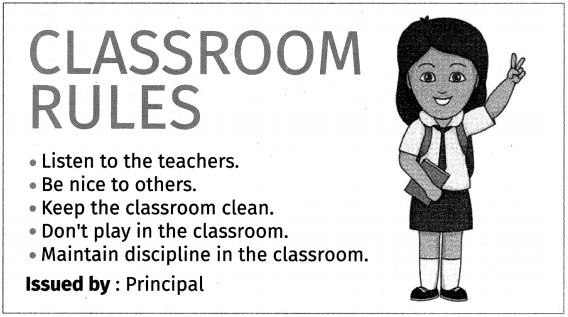
IMPORTANT TERMS RELATED TO SPHERICAL MIRROR:
(а) Pole: Pole is the central point ‘P’ of the reflecting spherical surface.
(b) Aperture: Aperture is the width (LL’ or MM’) of the reflecting surface from which reflection takes place actually.
(c) Centre of curvature: Centre of curvature is the geometrical centre of the hollow sphere ‘C’ from which the mirror is formed.
(d) Radius of curvature: Radius of curvature is the radius ‘R’ of the hollow sphere whose part is spherical mirror or distance between the pole and center of curvature.
(e) Principal axis: Principal axis is the straight line which joins the pole and centre of curvature.
(f) Principal focus: Principal focus is the point ‘F’ on the principal axis where a parallel beam of light parallel to the principal axis actually meets (in case of concave mirror) or appears to come from (in case of convex mirror) after reflection is called principal focus.
CBSE Class 10 Science Practical Skills – Focal Length of Concave Mirror and Convex Lens 2
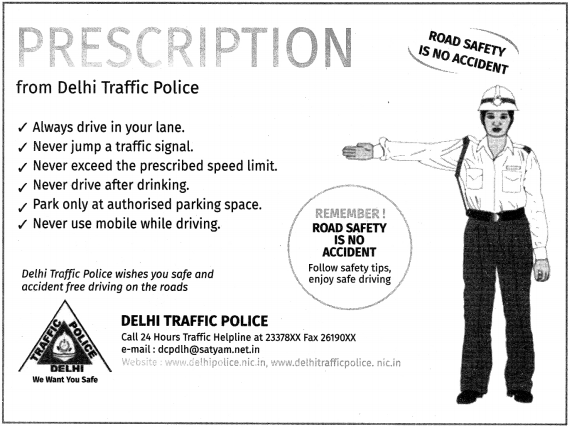
(g) Focal length: Focal length is the distance ‘f’ between the pole and principal focus of the spherical mirror.

You can also download Class 10 NCERT Science Solutions to help you to revise complete syllabus and score more marks in your examinations.

Mirror formula: The relation between the object distance (u), the image distance (v) and the focal length (f)of a mirror is called mirror formula and is given by
CBSE Class 10 Science Practical Skills – Focal Length of Concave Mirror and Convex Lens 3

This expression is valid nd remains the same for various positions of the object with concave as well as convex spherical mirrors

SOME MORE FACTS ABOUT CONCAVE MIRROR:

  1.  It reflects the sunlight leading to brighter dazzling patch of light.
  2. The sharpest and brightest spot of light on the screen is the focus of a concave mirror.
  3.  Using the relation R = 2f, we can calculate the radius of curvature of the mirror.
  4. The nature, size and position of the image formed by a concave mirror depends on the position of object in front of the mirror.
  5. A virtual, erect and enlarged image of an object is formed behind the concave mirror while the real and inverted image is formed in front of the mirror.
  6.  A concave mirror is called a converging mirror because it converges the parallel beam of light rays after reflection at a point.
  7. If a light emitting source is kept at the focus of a concave mirror, it spreads a powerful parallel beam of light to a larger distance.
  8.  If a piece of carbon paper is kept at the focus of a concave mirror, it begins to burn with smoke initially and after that it catches fire and burns quickly.
  9.  It is used to concentrate the heat at a point, so it can be used in solar heating devices.

AIM
To determine the focal length of a concave mirror by obtaining the image of a distant object.

MATERIALS REQUIRED
A concave mirror, a metre scale, a mirror holder.

THEORY

  1. The nature of the image formed by a concave mirror, depends upon the position of the object in front of it.
  2. When a parallel beam of light coming from a distant object, such as tree or pole is incident on the reflecting surface of a mirror, then after reflection, the rays converge at a point and this point is called principal focus of the concave mirror as shown in the figure.
  3. If a screen is placed at the point of focus, a sharp, real and inverted image of the distant object is obtained.
  4.  The distance between the pole and principal focus of a spherical mirror is called focal length of the mirror. It is equal to half the radius of curvature of the mirror.

CBSE Class 10 Science Practical Skills – Focal Length of Concave Mirror and Convex Lens 4

PROCEDURE

  1.  Select a distant object such as a tree or pole or the sun.
  2.  Mount the concave mirror in a mirror holder.
  3.  Adjust the concave mirror in such a way that the rays of light coming from the tree fall on its reflecting surface.
  4.  Obtain a well defined and sharp image on a white wall of the laboratory by moving the mirror backward or forward.
  5. Measure the distance between the wall and the concave mirror with the help of a meter scale as shown in figure (a) or figure (b).
  6. This will give you approximate focal length of the mirror.
  7. Repeat the experiment by selecting the different distant objects at different distances.

CBSE Class 10 Science Practical Skills – Focal Length of Concave Mirror and Convex Lens 5
CBSE Class 10 Science Practical Skills – Focal Length of Concave Mirror and Convex Lens 6
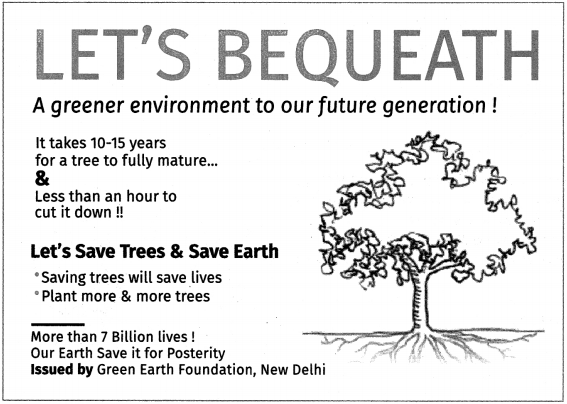
OBSERVATION AND CALCULATION
CBSE Class 10 Science Practical Skills – Focal Length of Concave Mirror and Convex Lens 7

RESULT
The approximate focal length of the given concave mirror is………. cm, as determined.
According to the sign conventions, the focal length of a concave mirror is negative.  Therefore,
f = -………cm

PRECAUTIONS

  1.  The distant object should be clearly visible.
  2. The image on the wall should be well defined and sharp.
    (Student must pay special attention to get the sharp image. Obtaining a blurred image will give you an incorrect measurement of the focal length of a concave mirror).
  3.  While measuring the distance, the meter scale should be kept parallel to the ground.
  4.  The meter scale must be correctly positioned between the wall and center of the concave mirror. Important note: This experiment can be performed outside the laboratory by taking the image on the screen (white paper) or white painted board or outer wall of the laboratory.

INTERACTIVE SESSION

Question 1:
What are you doing?
Answer:
I am finding the focal length of a concave mirror by obtaining the image of a distant object.

Question 2:
What is spherical mirror?
Answer:
It is a part of a hollow sphere having a highly polished reflecting surface inside or outside.

Question 3:
Which surface in your mirror is reflecting surface, inner or outer?
Answer:
Outer surface is silvered and regular reflection takes place from the inner surface of the mirror.

Question 4:
Is the image formed by a concave mirror real or virtual?
Answer:
Image formed by the concave mirror depends on the position of the object. When the object is kept between pole and its focus, a virtual image is obtained, whereas a real image is obtained for all other positions of the object.

Question 5:
What is the difference between a real and virtual image?
Answer:
A real image is obtained on the screen, whereas a virtual image cannot be obtained on the screen. Also, when the rays of light after reflection actually meet, a real image is formed. If the rays of light appear to meet after reflection, a virtual image is formed.

Question 6:
What is focal length of a concave mirror?
Answer:
The distance between the pole and the focus of a mirror is called focal length of the concave mirror.

Question 7:
What is radius of curvature?
Answer:
The radius of the hollow sphere, from which a mirror is formed, is called its radius of curvature.

Question 8:
Is there any relationship between radius of curvature and focal length of the mirror?
Answer:
Yes, the radius of curvature is twice the focal length.

Question 9:How will you get more accurate value of focal length?
Answer:
By obtaining the sharp image of the Sun.

Question 10:
State the laws of reflection of light.
Answer:

  1. The angle of incidence is equal to the angle of reflection.
  2. The incident ray, the reflected ray and the normal at the point of incidence, all lie in the same plane.

Question 11:
Suppose two spherical mirrors with reflecting surface towards your face are lying on the table. How will you distinguish between them just by looking?
Answer:
The mirror which forms the virtual, erect and magnified image of our face is concave. If it produces diminished image then it is convex mirror.

Question 12:
What are the uses of a concave mirror?
Answer:
It is used as a reflector in ophthalmoscope, telescope, headlights of motor vehicles, shaving or make up mirror and also reflector in searchlight and an electric room heater.

NCERT LAB MANUAL QUESTIONS

Question 1:
How will you distinguish between a concave and a convex mirror?
Answer:
CBSE Class 10 Science Practical Skills – Focal Length of Concave Mirror and Convex Lens 8
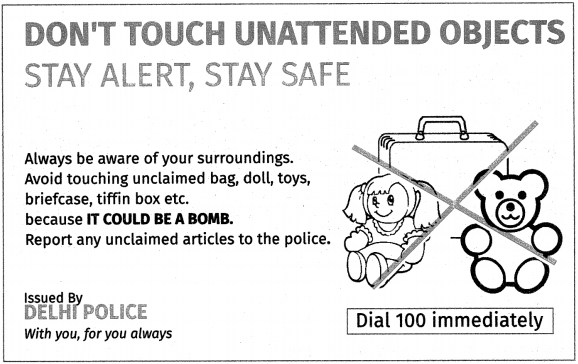
Question 2:
To determine the focal length of a concave mirror, a student focusses a classroom window, a distant tree and the sun on the screen with the help of a concave mirror. In which case will the student get more accurate value of focal length?
Answer:
In case of the sun student will get more accurate value of focal length.

Question 3:
What will be the nature of the image formed by a concave mirror for a distant object?
Answer:
The image formed by a concave mirror for a distant object is real and inverted.

Question 4:
In reflector type solar cookers, special concave (parabolic) mirrors are used. In such cookers, what should be the preferable position of food vessel for cooking?
Answer:
The preferable position of food vessel should be at focus of the concave mirror.

Question 5:
What type of mirror is used in a torch? Give reasons.
Answer:
Concave spherical or parabolic mirror is used because when the bulb (source) is kept at the focus of a mirror, parallel beam of light is obtained which travels a large distance.

Question 6:
What type of mirror is used as shaving mirror or in vanity boxes?
Answer:
Concave mirror because when the object is placed between its focus and pole, the magnified, erect and virtual image of the object will be formed.

PRACTICAL BASED QUESTIONS
Multiple Choice Questions/VSA

Question 1:
In the set-up shown below, a clear image of a distant object is obtained on the screen. The focal length of the concave mirror is
CBSE Class 10 Science Practical Skills – Focal Length of Concave Mirror and Convex Lens 9
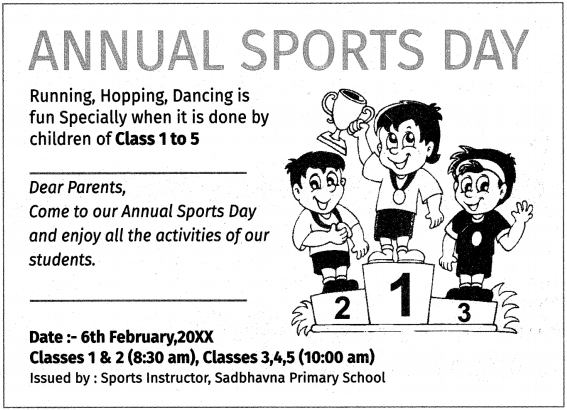
(a)11.4 cm
(b)9.4 cm
(c)9.8 cm
(d)9.9 cm

Question 2:
Four students A, B, C and D carried out measure-ment of focal length of a concave mirror as shown in the following four diagrams.
CBSE Class 10 Science Practical Skills – Focal Length of Concave Mirror and Convex Lens 10
The best result will be obtained by student
(a) A
(b) B
(c) C
(d) D

Question 3:
A student determines the focal length of a device X, by focussing the image of a far off object on the screen positioned as shown in the figure below.
CBSE Class 10 Science Practical Skills – Focal Length of Concave Mirror and Convex Lens 11
The device X is a
(a) convex lens
(b) concave lens
(c) convex mirror
(d) concave mirror

Question 4:
To find the focal length of a concave mirror Rahul focuses a distant object with his mirror. The chosen object should be
(a) a tree
(b) a building
(c) a window
(d) the sun

Question 5:
While doing an experiment, a student found that if the object moves from infinity towards pole of a mirror, the image also moves from pole to infinity. The mirror must be
(a) parabolic
(b) concave
(c) convex
(d) all of these

Question 6:
A student selected the sun as a distant object to find the focal length of a concave mirror. His teacher advised him to use a screen of wood or hard cardboard. It is because
(a) white paper is not available in the lab.
(b) white paper is costlier than other papers
(c) white paper may start burning when sun rays converge on it.
(d) white paper scatters the light rays falling on it.

Question 7:
The image of a distant object is obtained on a screen by using a concave mirror. The focal length of the mirror can be determined by measuring the distance between
(a) the object and the mirror
(b) the object and the screen
(c) the mirror and the screen
(d) the mirror and the screen as well as that between the object and the screen

Question 8:
Out of the following, the best way to do the experiment on finding the focal length of a concave mirror by obtaining the image of a distant object, is to
(a) hold the mirror in hand and keep the screen in a stand kept behind the mirror
(b) hold the mirror in a stand and hold the screen in hand, with the screen in front of the mirror.
(c) keep both the mirror and screen in suitable stands with the screen put in front of the mirror.
(d) keep both the mirror and the screen in suitable stands with the screen put behind the mirror.

Question 9:
A student obtains a blurred image of an object on a screen by using a concave mirror. In order to obtain a sharp image of the same object on the screen, he will have to shift the mirror .
(a) to a position very far away from the screen
(b) little away from the screen
(c) towards the screen
(d) either towards or away from the screen depending upon the position of the object

Question 10:
A student focused the image of a distant object using a device X on a white screen S as shown in the figure. If the distance of the screen from the device is 30 cm, select the correct statement about the device X.
CBSE Class 10 Science Practical Skills – Focal Length of Concave Mirror and Convex Lens 12
(a) The device X is a concave mirror of focal length 15 cm.
(b) The device X is a concave mirror of focal length 30 cm
(c) The device X is a concave mirror of radius of curvature 30 cm.
(d) The device X is a convex mirror of focal length 30 cm

Question 11:
A student obtained a sharp image of grills of a window on a white screen using a concave mirror. His teacher remarked that for getting better value of focal length of the mirror he should focus a distant object (preferably the sun) on the screen. What should the student do for this purpose?
(a) Move the mirror and the screen towards the object
(b) Move the mirror and the screen away from the object
(c) Move the screen slightly away from the mirror
(d) Move the mirror slightly towards the screen

Question 12:
A student has to do the experiment, on finding the focal length of a given concave mirror by using a distant object. Out of the following ‘set-ups’ (A, B, C, D) available to her –
(A) a screen, a mirror holder and a scale
(B) a mirror holder, a screen holder and a scale
(C) a screen holder and a scale
(D) a mirror holder and a screen holder the ‘set-up’ that is likely to give her the best result, is the ‘set-up’ labelled as
(a) A
(b) B
(c) C
(d) D

Question 13:
A student recalls the rules to draw ray diagrams with the help of a concave mirror.
(i) The ray of light parallel to the principal axis will converge at the focus after reflection.
(ii) The ray of light passing through the centre of curvature will retrace its path after reflec-tion.
(iii) The ray of light falling at the pole gets reflected at a different angle on the other side of principal axis.
The correct statement(s) is/are
(a) (i) only
(b) (i) and (ii) only
(c) (ii) and (iii) only
(d) (i) and (iii) only

Question 14:
Which of the following pictures depicts the correct image of a distant object by using a concave mirror?
CBSE Class 10 Science Practical Skills – Focal Length of Concave Mirror and Convex Lens 13

Question 15:
CBSE Class 10 Science Practical Skills – Focal Length of Concave Mirror and Convex Lens 14
In the above set-up, the focal length of the concave mirror is 4.0 cm. The marks on the scale on which the screen be placed to obtain a sharp image will be
(a) at 8 cm
(b) at 2 cm
(c) at 6 cm
(d) at 1 cm

Short Answer Questions

Question 1:
State the condition when a concave mirror forms an image

  1.  larger than the actual object.
  2.  smaller than the actual object.

Question 2:
Why is a concave mirror of large focal length often used as a shaving mirror?

Question 3:
What happens to the ray of light after reflection from a concave mirror, if it

  1. is parallel to the principal axis?
  2.  passes through the center of curvature?

Question 4:
A student takes a mirror which is depressed at the centre and mounts it on a mirror stand. An erect and enlarged image of his face is formed. He places the mirror on a stand along a metre scale at 10 cm mark. In front of this mirror, he
mounts a white screen and moves it back and forth along the metre scale till a highly sharp, well-defined image of a distant building is formed on the screen at 25.5 cm mark.

  1.  Name the mirror and find its focal length.
  2. Why does the student get sharp image of the distant building at 25.5 cm mark?

Question 5:

  1. A ray of fight passing through the center
    of curvature of a concave mirror is incident on its reflecting surface. What is the angle of incidence and angle of reflection of this ray?
  2. The radius of curvature of concave mirror is 42 cm. What is its focal length?

ANSWER KEY
Multiple Choice Questions/VSA –

1. (c)
2. (a)
3. (d)
4. (d)
5. (b)
6. (c)
7. (c)
8. (c)
9. (d)
10. (b)
11. (d)
12. (a)
13. (b)
14. (c)
15. (d)

Short Answer Questions

1.

  1.  When object is placed anywhere between
    pole and centre of curvature.
  2.  When object is placed anywhere between infinity and centre of curvature.

2. While shaving, we keep our face between the pole and focus of a concave mirror to obtain an erect and enlarged image of the face. This enlarged image of the face helps us in having a better and a closer shave.

3.

  1. After reflection, the ray of light passes
    through the focus of a concave mirror in this case.
  2.  In this case, the ray of light gets reflected back along the same path, i.e. through centre of curvature.

4.

  1. The mirror is a concave mirror. The focal
    length is the difference between mirror and screen, so, f = 25.5 cm-10 cm = 15.5 cm
  2. The rays of light coming from a distant object are parallel to principal axis and meets at the focus of concave mirror where the screen is placed. Thus, a sharp image of the distant building is formed.

5.

  1. The ray of light passing through the centre
    of curvature of a concave mirror strikes the mirror normally and gets reflected back along the same path; hence the angle of incidence and the angle of reflection will be equal to zero.
  2.  f = R/2 = 42/2 = 21 cm


Experiment  11(b)


BASIC BUILDING CONCEPTS
Lens: A homogeneous transparent material or medium bounded by two surfaces of different or same radii of curvature is called lens.
The curved surface of the lens may be either convex or concave and the other surface may be either plane or spherical.

TYPES OF LENS:
(а) Double convex lens: If both the refracting surfaces of the lens are convex, then the lens is said to be double convex lens or simply convex lens. It is thicker at the middle and thinner at the edges.
(б) Double concave lens: If both the refracting surfaces of the lens are concave, then the lens is said to be double concave lens or simply concave lens. It is thinner at the middle and thicker at the edges.

IMPORTANT TERMS ASSOCIATED WITH LENS:
(а) Optical centre: The central point ‘O’ on the principal axis of the lens, through which incident ray of light passes undeviated with negligible lateral displacement is called optical centre of the lens.
(b) Center of curvature: The center of the sphere, whose part is a spherical surface of the lens is called center of curvature. Since the lens has two spherical surfaces so two different center of curvatures C1 and C2 lie on either side of the surface.
(c) Radius of curvature: The radius of the sphere from which the spherical surface of lens is made, is called radius of curvature of lens. So each surface of lens have separate radii of curvature R1 and R2 respectively.
(d) Principal axis of lens: A line joining the centre of curvatures and C2 of the two spherical surfaces is the principal axis of the lens.
CBSE Class 10 Science Practical Skills – Focal Length of Concave Mirror and Convex Lens 15
For the refraction by spherical lens, we assume
(i) Lens to be a thin lens having small thickness.
(ii) Aperture of the thin lens is small, much less than its radius of curvature.
(e) Principal focus:
(i) Convex lens: When a parallel beam of light is incident on one of the spherical surface of a convex lens, the rays after refraction through it, meet at a fixed point on the principal axis. This point is called the principal focus of the convex lens.
Same effect can also be obtained from the other surface also. So the convex lens has two focus Fx and F2 one on each side of the lens.
CBSE Class 10 Science Practical Skills – Focal Length of Concave Mirror and Convex Lens 16
(ii)Concave lens: When a parallel beam of light is incident on either of the spherical surface of a concave lens, after refraction through it, they appear to come from a fixed point on the principal axis. This point is called the principal focus of a concave lens.
Fig. Principal Focus of a Concave Lens
CBSE Class 10 Science Practical Skills – Focal Length of Concave Mirror and Convex Lens 17
(f) Focal length: The distance of the principal focus from the optical centre of the spherical lens is called the focal length T of the lens.
If the lens (both spherical surfaces) is surrounded by the same medium having equal refractive indices, then the two principal focal lengths of the lens will be equal, i.e., OFx = OF, = f ,
The focal length of the lens depends upon the following factors:
(i) Radius of curvature of both the refracting surfaces and
(ii) Refractive index of the material of the lens.
Lens Formula: The relation between object distance (u), image distance (v) and focal length (f) of lens is
given by
CBSE Class 10 Science Practical Skills – Refraction Through Glass Slab 19
This expression is valid for all the various positions of the object with a spherical lens including the virtual
image formed by concave lens or a convex lens.

SOME MORE FACTS ABOUT CONVEX LENS

  1.  It converges the incident parallel beam of light on the other side of the lens. So it is called convergent lens also.
  2.  A ray of light passing through the first principal focus (in a convex lens), or appearing to meet at it (in a concave lens) emerges parallel to the principal axis after refraction.
  3. The image formed by the convex lens may be real or virtual, inverted or erect, diminished, same size or magnified, i.e., enlarged depending on the various positions of the object.
  4.  Focal length for convex lens is positive while it is negative for concave lens.
  5. The linear magnification produced by a convex lens can be less than one, equal to one or greater than one and it has no unit.
  6. In case of convex lens, magnification is positive for virtual image and negative for real image. In case of concave lens magnification is always positive because virtual image is always formed.
  7.  The lens behaves as a plane glass plate only when it is kept in a medium whose refractive index is equal to that of lens.
  8. The degree of convergence or divergence of light rays incident on any refracting surface of the lens is called the power of a lens.
  9. A lens of large focal length bends the light rays less after refraction through a small angle by focussing them away from the optical center.
  10. . Magnification and sharpness of the image formed by a lens can be increased by combining a number of lenses. Such a lens system is commonly used in various optical instruments such as cameras, telescope, microscope etc.

AIM
To determine the focal length of a convex lens by obtaining the image of a distant object.

MATERIALS REQUIRED
A convex lens, lens holder, white screen such as wall or white painted board, meter scale, distant object.

THEORY

    1. The rays coming from the distant object such as tree/sun/electric bulb or tall building travelling a large distance, can be considered as a parallel beam of light.

CBSE Class 10 Science Practical Skills – Focal Length of Concave Mirror and Convex Lens 19

  1. These rays after refraction through the convex lens converge at a point called focus.
  2.  The separation between the lens and the screen placed at the focus gives the approximate focal length of a convex lens.
  3. The image obtained on the screen kept at principal focus is real, inverted and highly diminished i.e. much smaller in size than the object.

PROCEDURE

  1. Select a far off object such as tree/windows of other building/any other far away object in the laboratory/ Sun.
  2. Mount the lens in a lens holder.
  3. Keep the lens in a vertical position throughout the experiment.
  4. Place the lens towards a selected distant object.
  5. Keep a screen on the other side of the lens.
  6. Move the lens forward or backward to get a sharp, real and inverted image on the screen.
  7.  Measure the distance between lens and screen at this position of the lens.
  8.  Repeat this procedure by changing the distant object.
  9. The distance between the screen (when sharp image is obtained) and convex lens give approximate focal length of the convex lens.

OBSERVATION AND CALCULATION
CBSE Class 10 Science Practical Skills – Focal Length of Concave Mirror and Convex Lens 20

RESULT
The approximate focal length of a convex lens = …………cm.

PRECAUTIONS

  1. The lens holder along with lens should be kept vertical throughout the experiment.
  2.  Screen should be neat and clean to get clear image. It must be white.
  3.  While measuring the distance, metre scale should be kept horizontal and it must be parallel to the ground.
  4.  Distance should be measured only when well defined sharp image of the distant object is obtained.
  5. Lens and screen should be at same level.
  6. The lens used in the experiment must be clean.

Important Note: The procedure to find the approximate focal length of a convex lens does’ not apply to the concave lens because concave lens always forms a virtual and erect image for any position of the object. The virtual image cannot be taken on the screen.

INTERACTIVE SESSION

Question 1:
What are you doing?
Answer:
I am finding the focal length of a convex lens by forming the image of a far off object on a screen.

Question 2:
What type of image will you get?
Answer:
Real, inverted and diminished i.e. much smaller in size to that of the object.

Question 3:
Which other lens produces a diminished image?
Answer:
Concave lens produces a diminished image of an object held between optical centre and infinity.

Question 4:
What do you mean by infinity?
Answer:
When the object is at sufficiently large distance from the lens/mirror as compared to the focal length of the lens/mirror, the object is said to be at infinity.

Question 5:
Which optical phenomena is represented by this experiment?
Answer:
Refraction.

Question 6:
What is refraction?
Answer:
When the light rays travelling obliquely from one medium to another, a change in the direction of propagation in the second medium is observed. This phenomena is known as refraction of light.

Question 7:
It means light does not travel in the same direction in all media.
Answer:
Yes, it is true.

Question 8:
Suppose a lemon is kept in water in a bowl and viewed from outside. Will it appear larger or smaller than its actual size and why?
Answer:
It appears larger than its actual size because of refraction.

Question 9:
In what terms will you express the extent of the change in direction that takes place in a given pair of media?
Answer:
It is expressed in terms of refractive index.

Question 10:
Which important physical quantity can be linked with refractive index?
Answer:
Speed of light in different media.

Question 11:
How?
Answer:
The refractive index of second medium with respect to first medium is given by the ratio of the speed of light in media first to the speed of light in media second.

Question 12:
What is the relationship between angle of incidence and angle of refraction?
Answer:
The ratio of the sine of the incident angle to the sine of refracted angle is a constant and is equal to the refractive index of second medium with respect to first medium i.e.
CBSE Class 10 Science Practical Skills – Focal Length of Concave Mirror and Convex Lens 21

Question 13:
What will be the position of the object to get the enlarged image on the same side of the lens as the object?
Answer:
Between focus F and optical centre O.

Question 14:
How the image is formed by the lens?
Answer:
Lens forms the image by refracting light. .

Question 15:
On what factor, the ability of a lens to converge the light rays depends?
Answer:
It depends on its focal length.

NCERT LAB MANUAL QUESTIONS

Question 1:
How will you distinguish between a convex and concave lens?
Answer:

  1.  Image formed by the convex lens may be real or virtual depending upon the position of object while concave lens always forms a virtual image wherever the object may be.
  2. Convex lens converges the parallel beam of light incident on it after refraction while concave lens diverges the same parallel beam of light which incident on it.
  3. The image formed by the convex lens may be equal in size, smaller or larger than the object while concave lens always forms diminished/smaller image of the object.

Question 2:
To determine the focal length of a convex lens, a student focusses a classroom window, a distant tree and the sun on the screen. In which case will the student is closer to accurate value of focal length?
Answer:
Sun

Question 3:
What is the nature of an image formed by a thin convex lens for a distant object? What change do you expect if the lens were rather thick?
Answer:
The image formed by a thin convex lens for a distant object will be real and inverted. A decrease in focal length will be observed when the lens becomes thicker.

Question 4:
You are provided with two convex lenses of same aperture and different thickness. Which one of them will be of shorter focal length?
Answer:
Thicker convex lens. .

Question 5:
If we cover one half of the convex lens while focussing a distant object, in what way will it affect the image formed?
Ans. A full size of image will still be obtained but only the intensity or brightness of image will reduce.

Question 6:
Can this method be used to find the approximate focal length of a concave lens?
Answer:
No, because concave lens always forms a virtual image wherever the object may be.

Question 7:
Which type of lens is used by the watch makers while repairing fine parts of a wrist watch?
Answer:
Convex lens because when the fine parts of a wrist watch are kept between its optical center and focus, magnified, virtual and erect images are formed.

PRACTICAL BASED QUESTIONS
Multiple Choice Questions/VSA (1 Mark)

Question 1:
Parallel rays, from a distant tree, incident on the device X, form its distinct image on a screen as shown. The diagram, correctly showing the image of the tree on the screen, is diagram
CBSE Class 10 Science Practical Skills – Focal Length of Concave Mirror and Convex Lens 22
(a) A and the device X is a convex lens
(b) A and the device X is a concave mirror
(c) B and the device X is a convex lens
(d) B and the device X is a concave mirror

Question 2:
In an experiment to determine the focal length of a convex lens, a student obtained a sharp and inverted image of a distant tree on the screen behind the lens. She then removed the screen and looked through the lens in the direction of object. She will see
(a) an inverted image of the tree at the focus of the lens.
(b) no image as the screen has been removed.
(c) a blurred image on the wall of the laboratory
(d) an erect image of tree on the lens.

Question 3:
While performing an experiment on determining
the focal length of a convex lens, a student obtains  a sharp and inverted image of the laboratory ; window grill on the screen and measures the distance d between the screen and the lens. She then repeats the experiment and takes a distant tree as the object in the second case. In order to  get a sharp image on the screen, she will now need to move the screen
(a) slightly nearer to the lens
(b) slightly farther away from the lens
(c) very close to the lens
(d) very far away from the lens

Question 4:
If you are to determine the focal length of a convex lens, you should have
(a) a convex lens and a screen.
(b) a convex lens and a lens holder.
(c) a lens holder, a screen holder and a scale.
(d) a convex lens, a screen, holders for them and a scale.

Question 5:
After performing the experiment to determine focal length of a convex lens by focussing a distant object, a teacher asked Asha to draw a j ray diagram of her experiment and show where did she place the screen for getting sharp image. The figure drawn by her is given below
CBSE Class 10 Science Practical Skills – Focal Length of Concave Mirror and Convex Lens 23
The point at which she had placed the screen during her experiment was
(a) at A
(b) at B
(c) at C
(d) at D

Question 6:
If the upper half portion of the lens is covered with black paper, the effect on image is
(a) upper half of the image will be absent
(b) the brightness of the image will be reduced
(c) size of the image depends on covered area of lens
(d)) there will be no effect

Question 7:
Which of the following can be used to find the focal length of a convex lens?
(a) Object at a distance of 10 cm for a lens of focal length 30 cm
(b) Light from a laboratory window
(c) Light from the sun
(d) Light from a tree next to the window

Question 8:
A sharp image of a distant object is obtained on a screen by using a convex lens. In order to determine the focal length of the lens, you need to measure the distance between the
(a) lens and the object
(b) lens and the screen
(c) object and the screen
(d) lens and the screen and also object and the screen

Question 9:
A student obtained a sharp image of the grill
of a window on a screen, using a convex lens. For getting better results, the teacher suggested focussing of a distant tree instead of the grill. In which direction should the lens be moved for this purpose?
(a) Away from the screen
(b) Very far away from the screen
(c) Behind the screen {d) Towards the screen

Question 10:
For the experiment on finding the focal length of
a convex lens by obtaining the image of a distant object, a laboratory assistant keeps the following apparatus on the table. [Foreign 2008]
A. A stand with a metal needle fixed in it
B. A stand with the given convex lens fitted in it
C. A thick cardboard white screen
D. A metre scale
A student can do the experiment by using the
apparatus listed as
(a) A, B, C, D
(b) B, C, D, A
(c) C, D, A, B
(d) D, A, B, C

Question 11:
Three students measured the focal length of a convex lens using parallel rays from a distant object. All of them measured the distance as given
Student A: distance between lens and screen
Student B: distance between object and screen
Student C: distance between object and lens Which student will get the correct focal length of lens?
(a) Student A only
(b) Student B and C both
(c) Student A and B both
(d) Student C only

Question 12:
Out of the following objects which one would you prefer to determine the focal length of a given convex lens by focusing its image on a screen?
(a) A burning candle placed on the far end of a laboratory table
(b) Grills of the laboratory window
(c)A tall tree visible from the laboratory window
(d)Sun rays entering the laboratory through its window.

Question 12:
Given below are few steps (not in proper sequence) followed in the determination of focal length of a given convex lens by obtaining a sharp image of a distant object:
(i) Measure the distance between the lens and screen.
(ii) Adjust the position of the lens to form a sharp image.
(iii) Select a suitable distant object.
(iv) Hold the lens between the object and the screen with its faces parallel to the screen.

Question 14:
A student focussed the image of a distant object using a device ‘X’ on a white screen ‘S’ as shown in the figure. If the distance of the screen from the device is 40 cm, select the correct statement about the device.
CBSE Class 10 Science Practical Skills – Focal Length of Concave Mirror and Convex Lens 24
(a) The device X is a convex lens of focal length 20 cm.
(b) The device X is a concave mirror of focal length 40 cm.
(c) The device X is a concave mirror of radius of curvature 40 cm.
(d) The device X is a convex lens of focal length 40 cm.

Short Answer Quetions

Question 1:
A student focused the image of a candle flame on a white screen by placing the flame at various distances from a convex lens. He noted his observations as given below:
CBSE Class 10 Science Practical Skills – Focal Length of Concave Mirror and Convex Lens 25
(a) What is the focal length of a given convex lens?
(b) Which set of observations is incorrect and why?

Question 2:
With the help of a diagram, differentiate between a converging and diverging lens. State one use of a convex lens.

Question 3:
A teacher sets up a stand carrying a convex lens of focal length 15 cm at 20.5 cm on the optical bench. She asks the students to suggest the position of the screen on the optical bench so that a distinct image of a distant tree is obtained on it. What should be the correct position of screen as suggested by the students and why?

Question 4:
A point-sized image of a distant object is formed at the principal focus of a convex lens. If the object starts moving towards the lens, how will the position of the image change? Illustrate it with suitable diagrams.

Question 5:
Explain how a converging lens acts as a magnifying glass. For this purpose, why a lens having a short focal length is chosen instead of lens having a long focal length?

ANSWER KEY
Multiple Choice Questions/VSA

1. (a)
2. (a)
3. (a)
4. (d)
5. (a)
6. (b)
7. (c)
8. (b)
9. (d)
10. (b)
11. (a)
12. (d)
13. (b)
14. (d)

Short Answer Questions

1.

  1. When the position of the object is at 2F, the
    image formed at 2F on the end other side of the lens is real, inverted and of same size as that of the object. Therefore,
    object distance = image distance
    2f = 30 cm
    f = 15 cm
    or
  2. For the last observation, we find that the object lies between the optical center and focus of the lens, so virtual image is formed and does not fall on the screen. Hence last observation is incorrect.

2. Converging lens: When a parallel beam of light is incident on one of the spherical surfaces of a convex lens, the rays after refraction through it meet at the principal focus on the principal axis. Since the convex lens converges the parallel beam of light, so it is called converging lens.
CBSE Class 10 Science Practical Skills – Refraction Through Glass Slab 20

Diverging lens: When a parallel beam of light is incident on one of the spherical surfaces of a concave lens, the rays after refraction through it appear to come from the principal focus on the principal axis. Since the concave lens diverges the parallel beam of light, so it is called diverging lens.
CBSE Class 10 Science Practical Skills – Focal Length of Concave Mirror and Convex Lens 27

One use of a convex lens: It is used as magnifying glass.

3. Distant object can be considered to be at infinity. The rays coming from the distant tree are parallel to each other and therefore, its image is formed at the principal focus of the convex lens. Hence, the screen should be placed at 20.5 + 15 = 35.5 cm mark on the optical bench.
CBSE Class 10 Science Practical Skills – Focal Length of Concave Mirror and Convex Lens 28

4. When an object starts moving from infinity towards the lens and reaches its focus, the image starts moving from its principal focus on the other side of the lens towards infinity. When an object lies in between focus and optical center, the image is formed on the same side of the lens
Object lies between the focus and optical center of the lens

5. To use a converging lens or convex lens as a magnifying glass, the object should be placed within its focus to get a magnified and erect image of the object as shown in the figure below:
CBSE Class 10 Science Practical Skills – Focal Length of Concave Mirror and Convex Lens 29
A convex lens of short focal length has a greater magnifying power in comparison to a convex lens of large focal length. Hence, the object will appear much larger when seen through a convex lens having short focal length.

Science Practical SkillsScience LabsMath LabsMath Labs with Activity